If you’re a homeowner in Minnesota, there’s a good chance you’ve looked at your deck and thought:
“Honestly… I could just pressure wash it.”
And we get it. Pressure washing seems like the fastest way to clean a deck, especially after a long winter or a wet spring when everything looks dirty and faded.
But here’s the truth:
High-pressure washing is one of the most common reasons decks end up looking worse, not better.
In this blog, we’ll explain what pressure washing actually does to wood, the warning signs that a deck has been damaged, and the safer way to clean a deck so it’s ready for staining or refinishing.
Why Pressure Washing Seems Like the Right Move (At First)
Most homeowners aren’t trying to cut corners — they’re just trying to solve a problem quickly.
Pressure washing feels like a good solution because it:
Removes visible dirt fast
Makes the deck look “clean” right away
Is easy to rent or buy
Feels like a good prep step before staining
But decks are different than concrete or siding. Wood is softer, more porous, and much easier to damage.
What High Pressure Actually Does to a Deck
When pressure is too high (or the tip is too aggressive), the water doesn’t just clean the deck — it starts tearing it apart.
Here are the biggest problems we see:
It Tears Up the Wood Grain
High pressure can literally rip into the wood fibers. That can leave grooves, striping, and an uneven surface that’s hard to fix without sanding.
It Leaves the Deck Surface “Fuzzy”
This is one of the biggest giveaways. Instead of a smooth surface, the deck feels rough and hairy — almost like the wood is fraying.
That fuzzy surface:
Doesn’t feel good under bare feet
Absorbs stain unevenly
Wears down faster over time
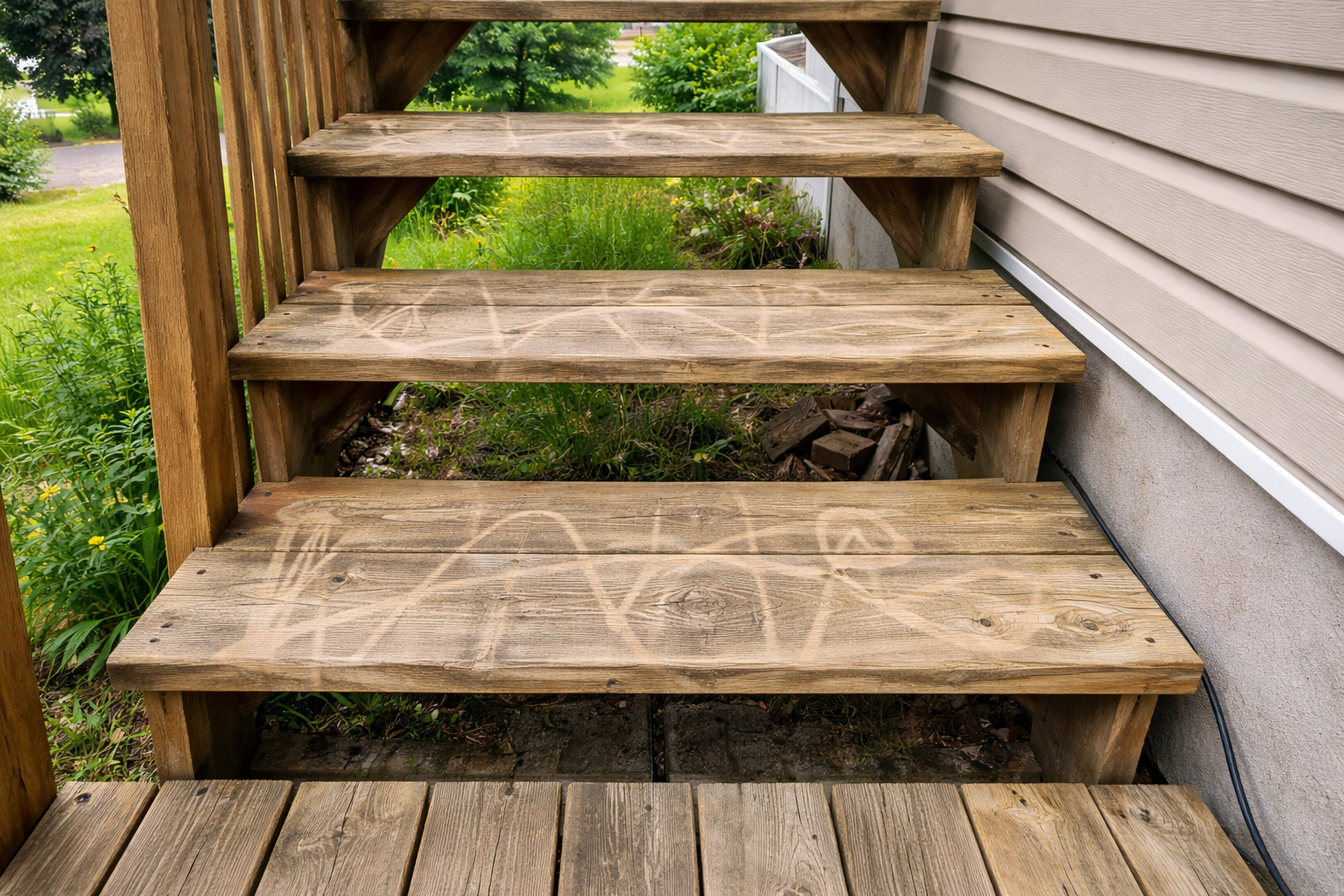
It Creates Uneven Marks and “Clean Lines”
If you stop moving for even a second, you can leave visible lines or marks.
We often see:
Zebra striping
Swirls
Clean spots and dirty spots
Darker grooves where the pressure lingered
Even if the deck looks “clean,” it may not look even.
It Shortens the Life of the Boards
Wood decks are built to last, but blasting them with high pressure can speed up deterioration by damaging the protective surface layer of the wood.
That can lead to:
Faster drying and cracking
More splintering
Quicker fading after staining
More frequent maintenance
Signs Your Deck Has Been Pressure Washed Too Aggressively
Not sure if a deck has been damaged? Here are common signs we see in Minnesota:
Rough, splintery boards afterward
Visible “lines” across the deck boards
Raised wood grain
Uneven color
Stain soaking in blotchy or dark in certain areas
Boards that look worn down in spots
If you’re planning to stain and your deck already looks like this, staining without proper prep usually makes the problem stand out even more.
Why This Matters Before Deck Staining
A lot of people pressure wash because they’re getting ready to stain. But here’s the issue… damaged wood doesn’t stain evenly.
Instead of getting a smooth, consistent finish, you may end up with:
Dark blotches
Light patches
Rough texture that shows through
Stain that doesn’t last as long
So while pressure washing might look like “prep,” it can actually create more work (and worse results) later.
The Better Way to Clean a Deck (Without Damaging It)
When we clean decks, we don’t rely on blasting the surface with high pressure. We focus on professional cleaning agents and low-pressure washing. That approach is safer for the wood and sets the deck up for a better finish.
Our Professional Deck Cleaning Method
Here’s what that looks like:
Protect landscaping and the home: We take care to protect plants, siding, doors, windows, patios, and nearby surfaces.
Apply cleaning agents first: Cleaning agents do the heavy lifting — loosening dirt, grime, and organic growth so it can be removed without harsh pressure.
Wash with low pressure: Low pressure is strong enough to rinse and clean, but gentle enough to avoid tearing up the wood fibers.
Brighten the wood: A brightener helps restore the wood’s tone and leaves the surface ready for staining.
Can You Pressure Wash a Deck Safely?
Sometimes, yes — but it takes experience and the right setup.
The problem is most homeowners:
Use too much pressure
Get too close to the boards
Use the wrong tip
Stay in one spot too long
Don’t brighten afterward
So while it’s possible, it’s also easy to damage the deck without realizing it until it’s too late.
If Your Deck Already Has Pressure Washing Damage, What Now?
If the deck has been roughened up or left uneven, the next step depends on how bad it is.
Options may include:
Brightening to improve tone
Sanding (if requested or needed)
Refinishing to restore appearance before staining
The goal is always the same: Get the wood back to a clean, even surface so the stain looks great and lasts.
Deck Cleaning in the twin cities (Done the Right Way)
If your deck is looking dirty, gray, or overdue for staining, we can help you clean it the safe way — without damaging the wood.
We use professional cleaning agents and low-pressure washing to protect the deck and prepare it for a longer-lasting finish.
Request a free estimate today.