Deck Cleaning

Why Deck Stains Peel (And How Twin Cities Homeowners Can Prevent It)

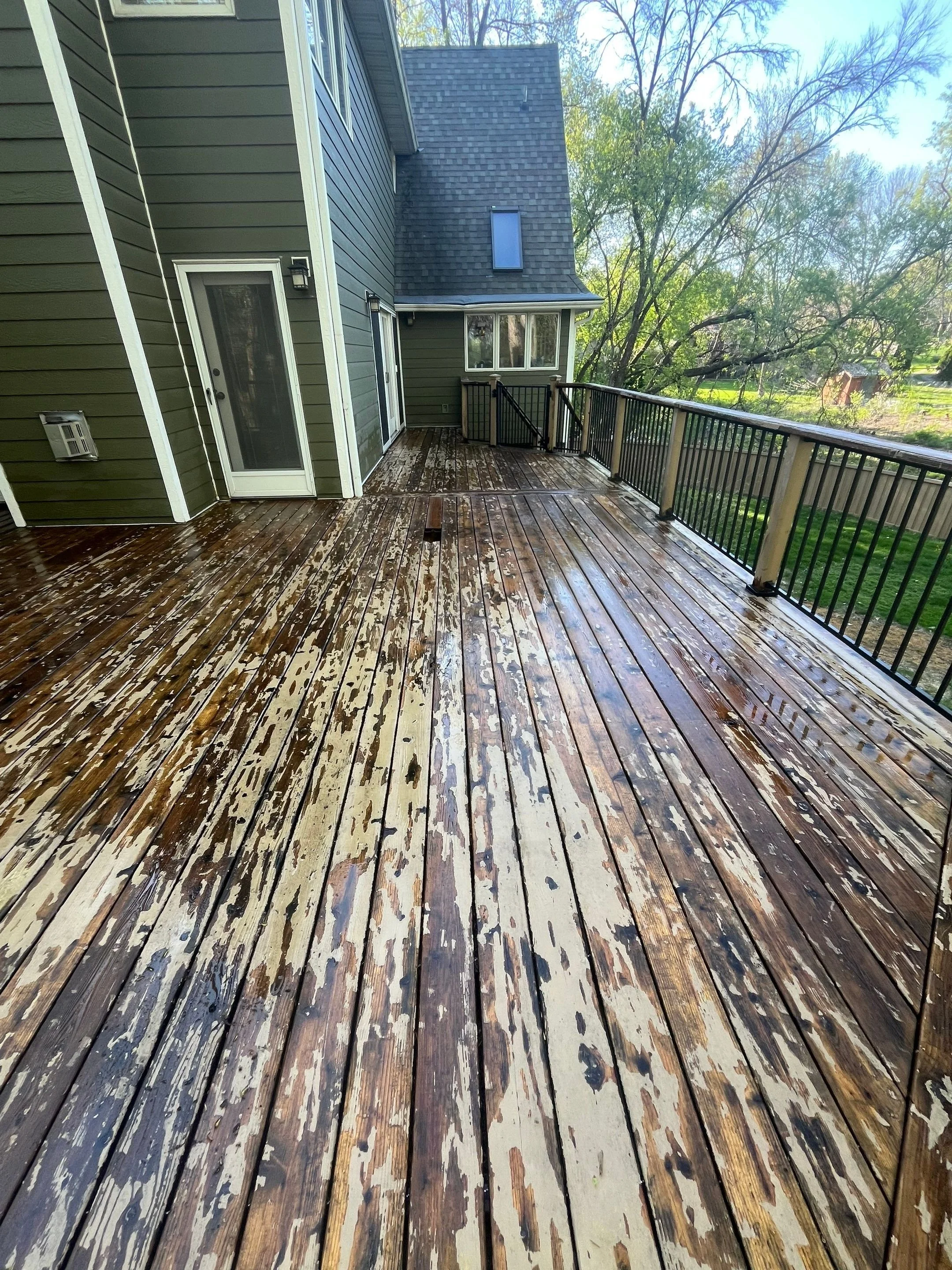
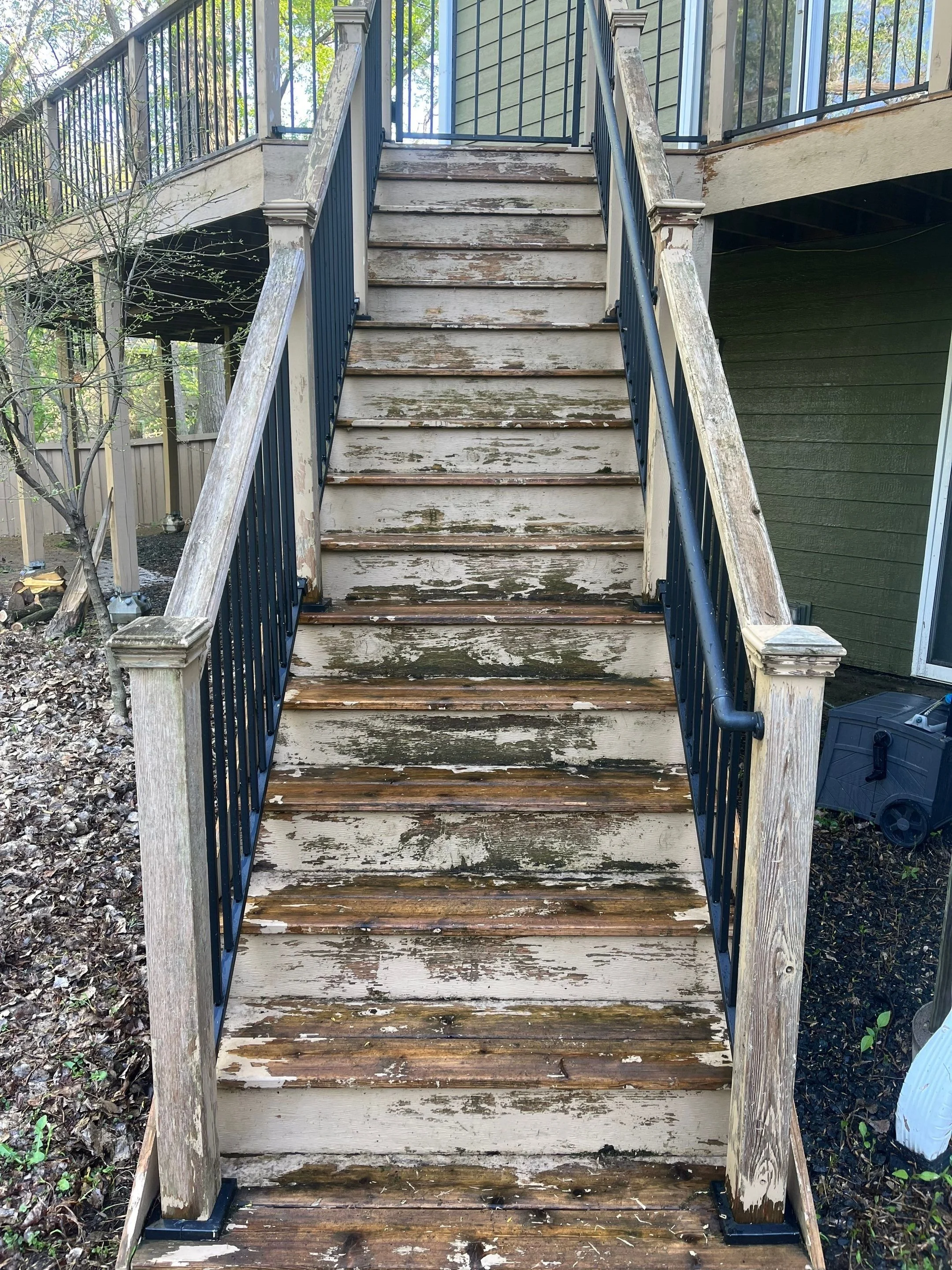
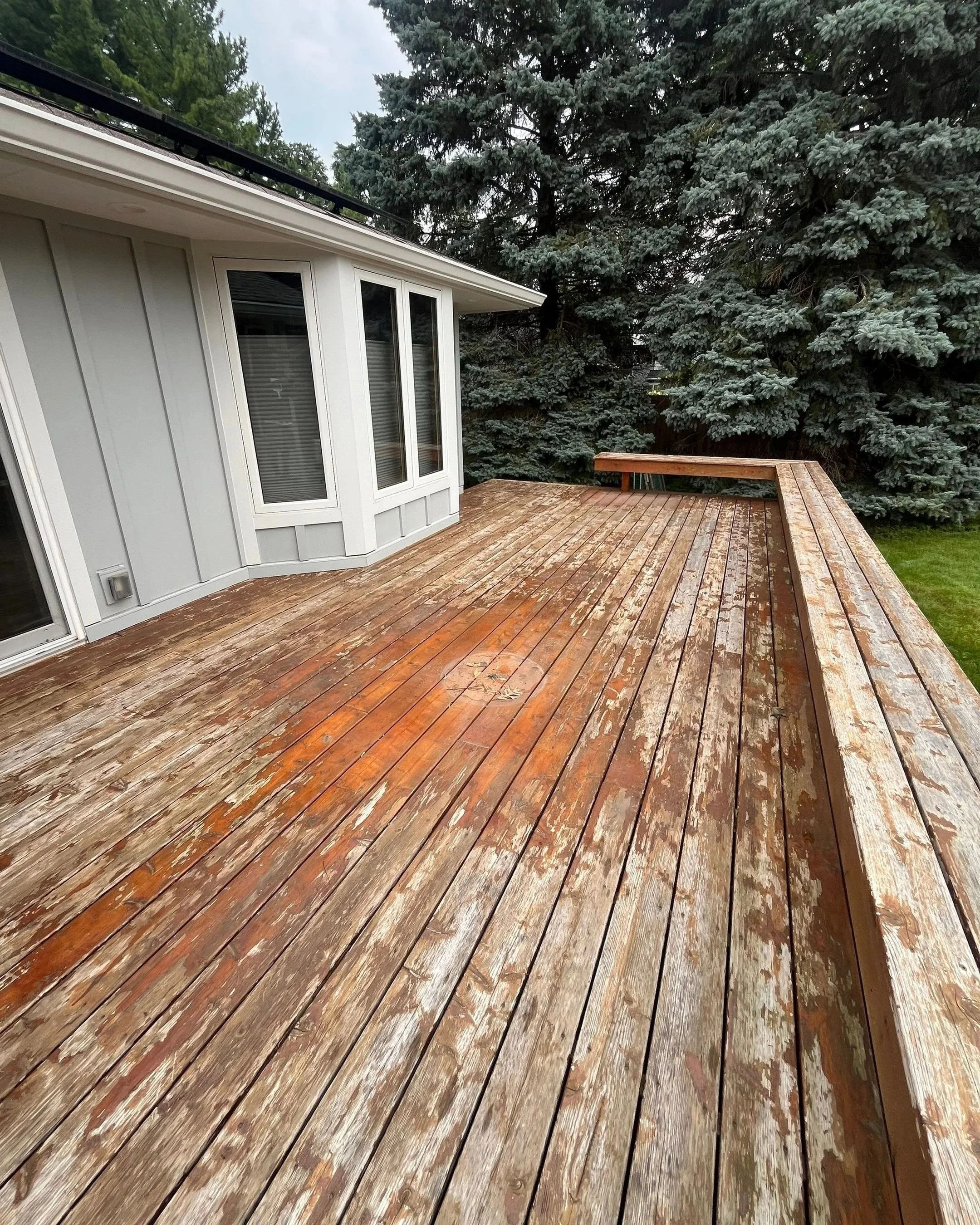
One of the most frustrating things homeowners deal with after staining a deck is peeling stain. You might notice stain lifting off the boards in patches or flaking away after only a year or two. This is a common issue on decks throughout Minneapolis, Saint Paul, and the surrounding Twin Cities.

The good news is that peeling usually isn’t random. It typically happens because of the type of stain used, the preparation process, or Minnesota’s climate conditions.

Understanding why it happens can help prevent the problem in the future.

The Most Common Cause: Film-Forming Stains

Many stains sit on top of the wood instead of penetrating into it.

These are known as film-forming coatings, and they behave similarly to paint. While they can look great at first, they are more vulnerable to peeling over time.

In Minnesota, decks experience:

  • Freeze and thaw cycles

  • Strong UV exposure during summer

  • Moisture from rain and snow

  • Heavy foot traffic

When wood expands and contracts through these conditions, the surface coating can lose its bond and begin to peel or flake away.

Preparation Problems Also Cause Peeling

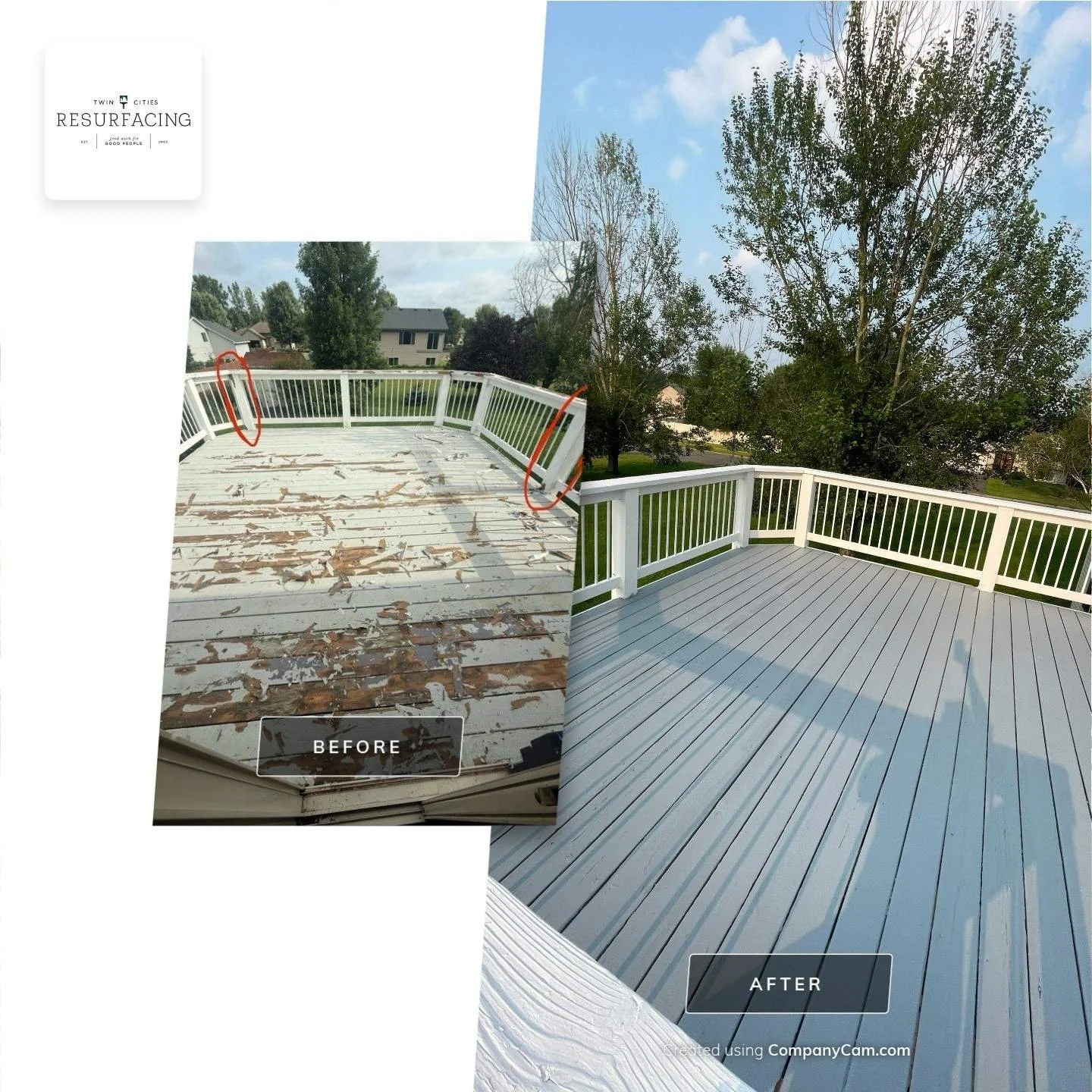
Another major reason deck stains fail is insufficient preparation before staining. If the wood isn't properly cleaned or if old coatings are still present, the new stain may struggle to bond correctly.

Common prep issues include:

  • Staining over failing coatings

  • Not removing mildew or dirt

  • Applying stain to damp wood

  • Skipping stripping when required

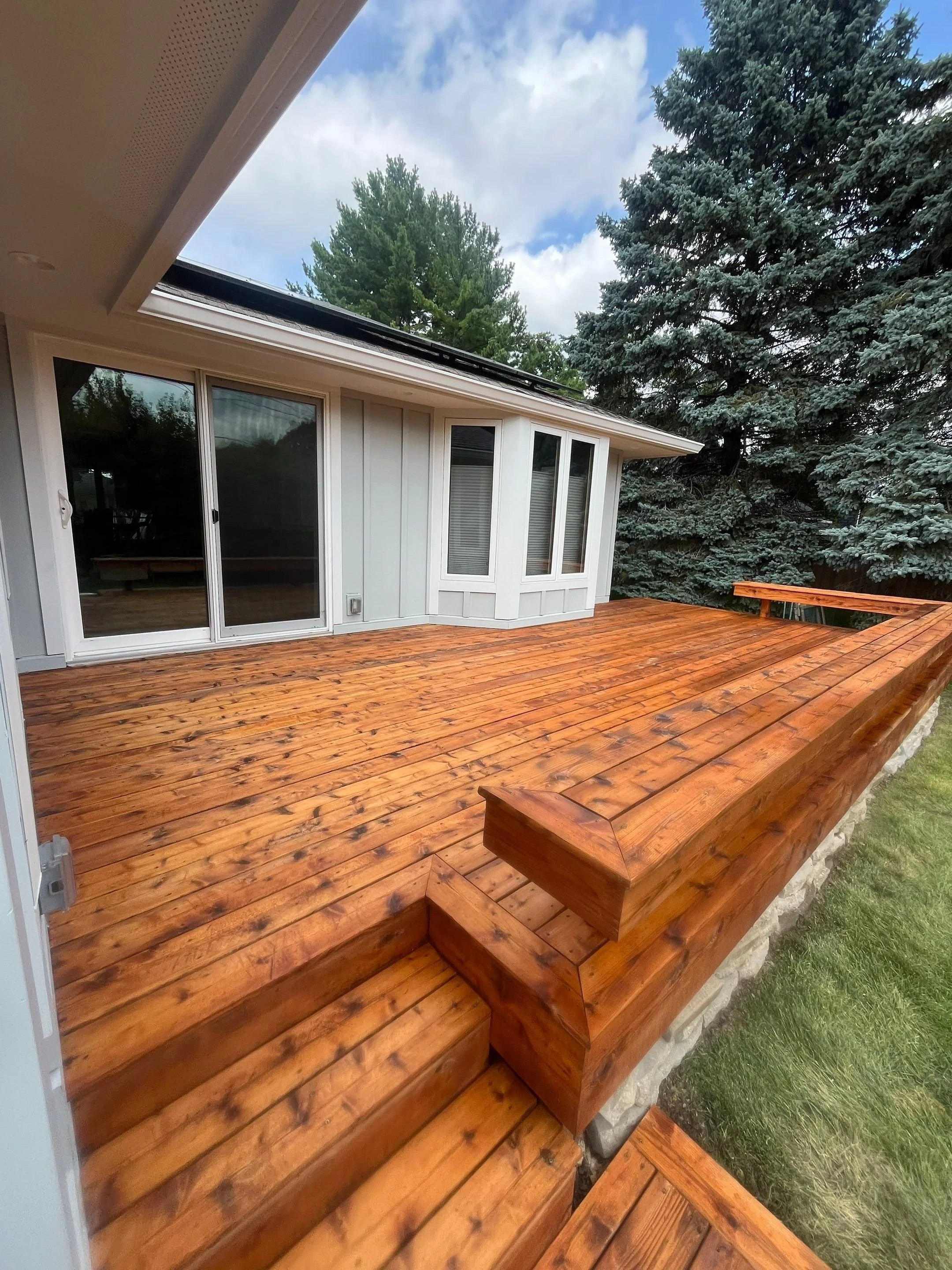
Professional deck refinishing focuses heavily on proper cleaning and surface preparation before staining begins.

The Best Way to Prevent Deck Stain Peeling

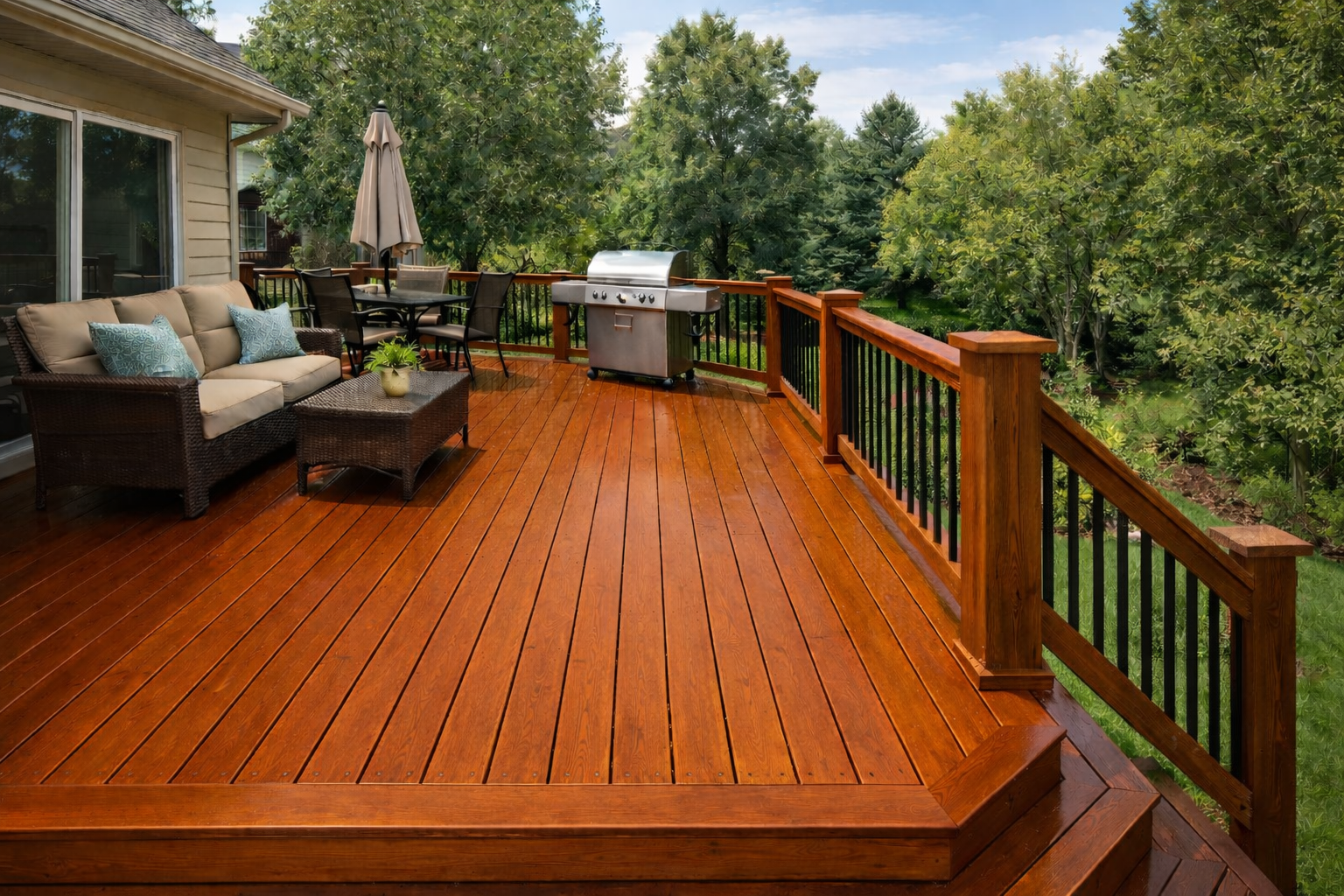
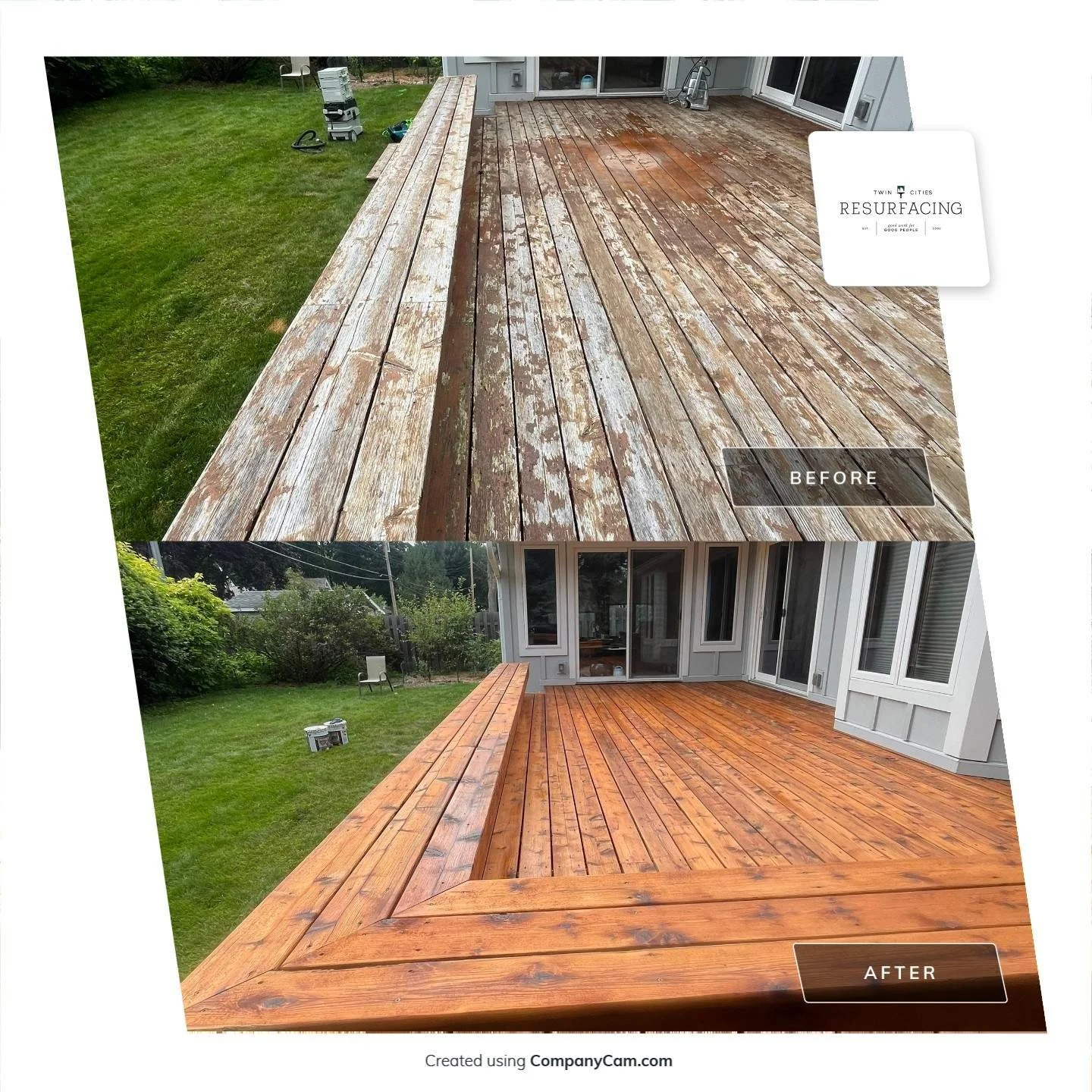
One of the most reliable ways to avoid peeling is to use a penetrating oil-based stain. Unlike film-forming coatings, penetrating stains soak into the wood fibers rather than sitting on top.

This means they:

  • Fade naturally over time

  • Rarely peel or flake

  • Are easier to maintain with future coats

For many Minnesota decks, this type of stain system creates the most forgiving and maintainable long-term result.

When a Peeling Deck Needs Professional Restoration

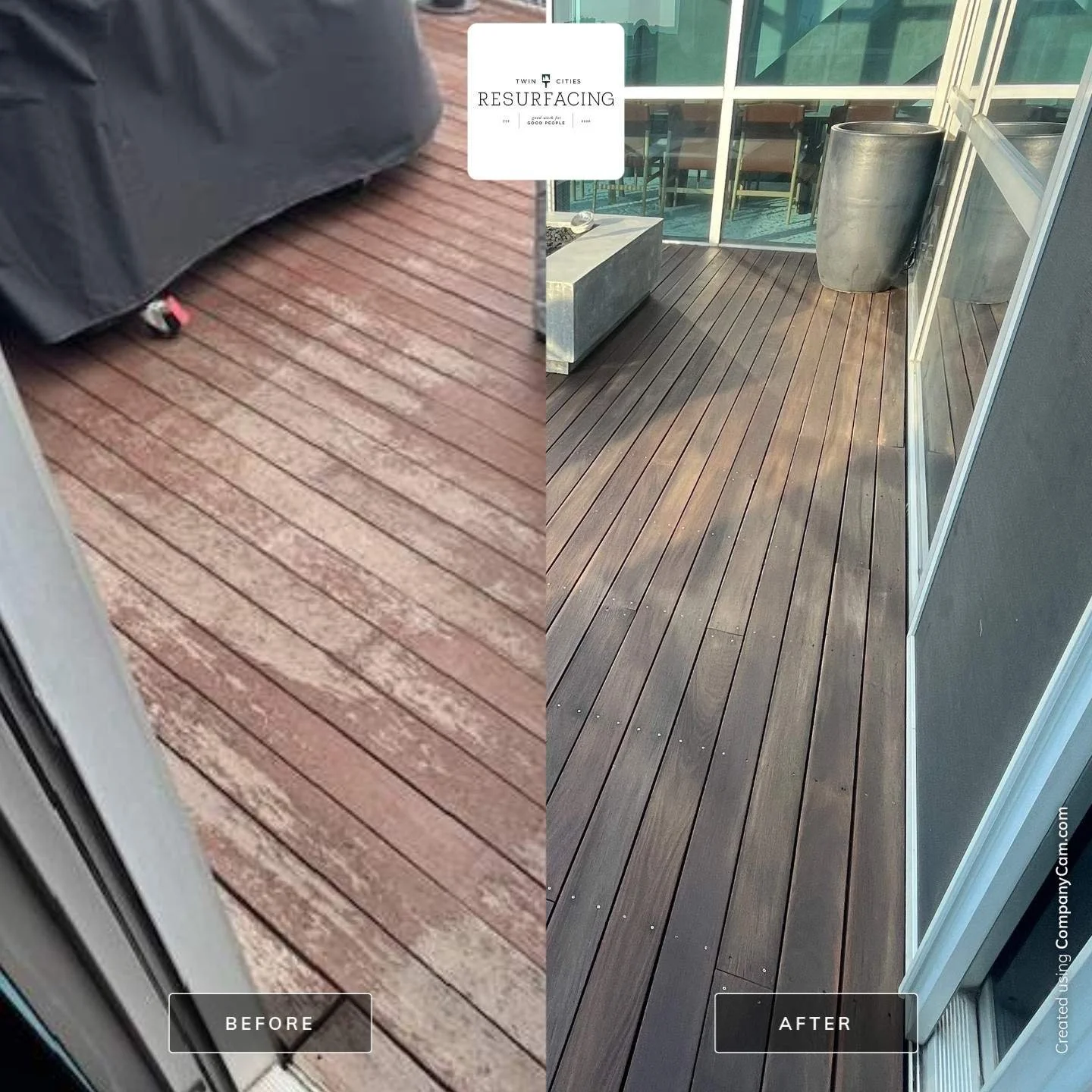
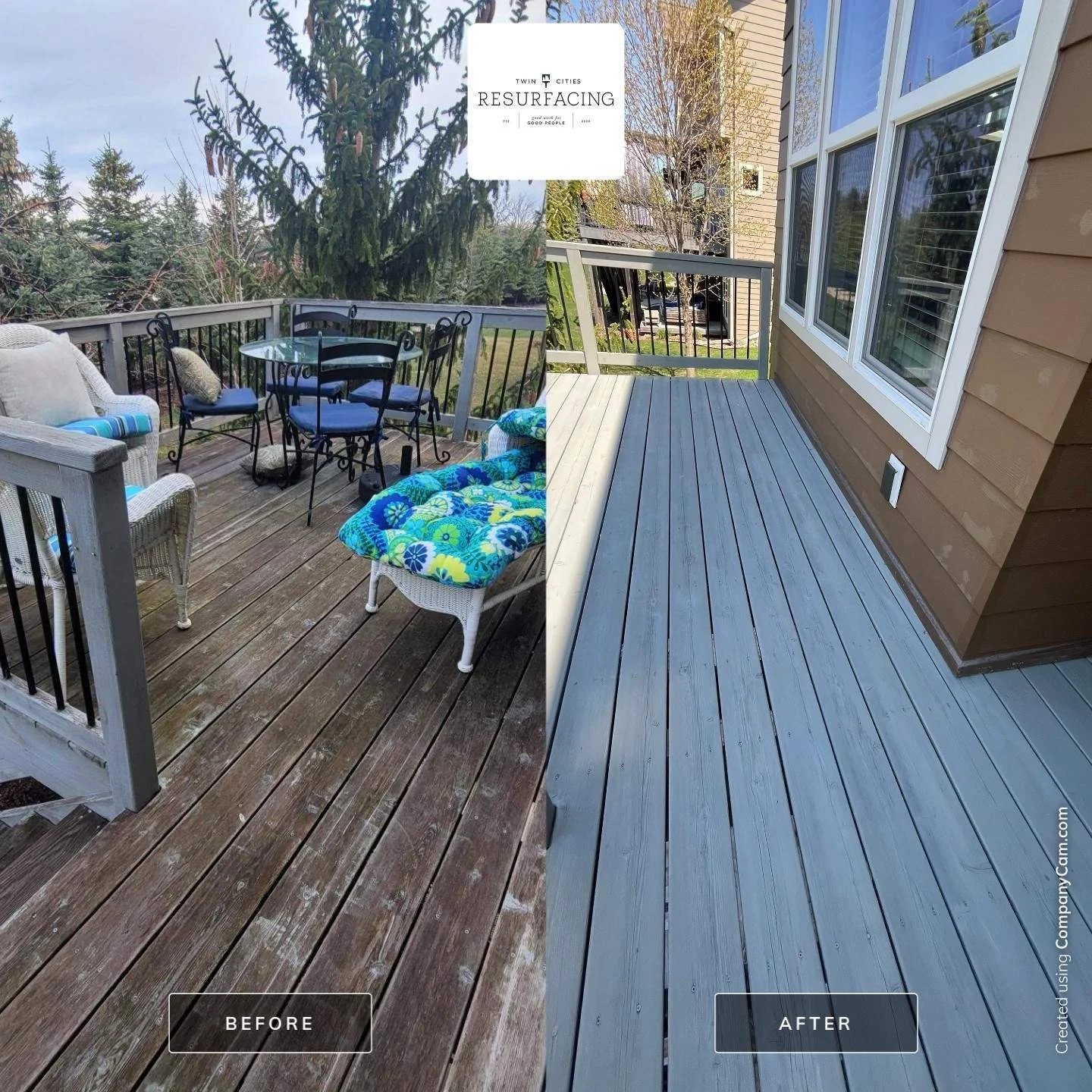
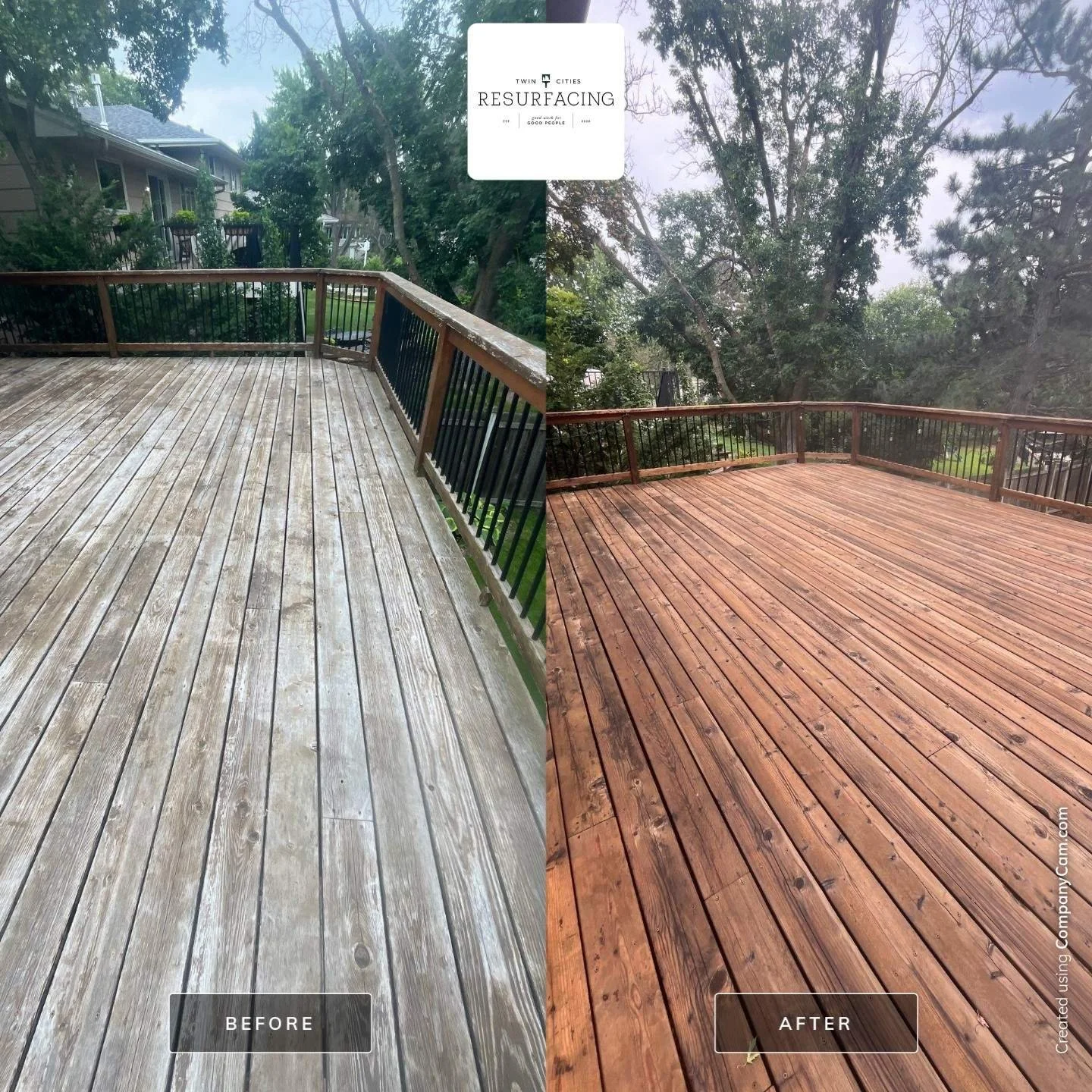
If a deck already has peeling stain, the solution often requires removing the existing coating before refinishing.

This may involve:

  • Chemical stripping

  • Deep cleaning

  • Sanding

  • Neutralizing the wood surface

Skipping these steps and applying stain over peeling areas usually results in the same problem returning.

Deck, Fence, and Pergola Staining Specialists in the Twin Cities

At Twin Cities Resurfacing, restoring outdoor wood surfaces is our specialty. For over 18 years, we’ve helped homeowners across the Twin Cities properly refinish and protect:

  • Decks

  • Fences

  • Pergolas

  • Outdoor wood structures

Our process focuses on thorough preparation and stain systems designed to perform in Minnesota’s demanding climate.

If your deck stain is peeling or failing, click below to request an estimate.

February Is the Smart Time to Plan Deck Refinishing in Minnesota

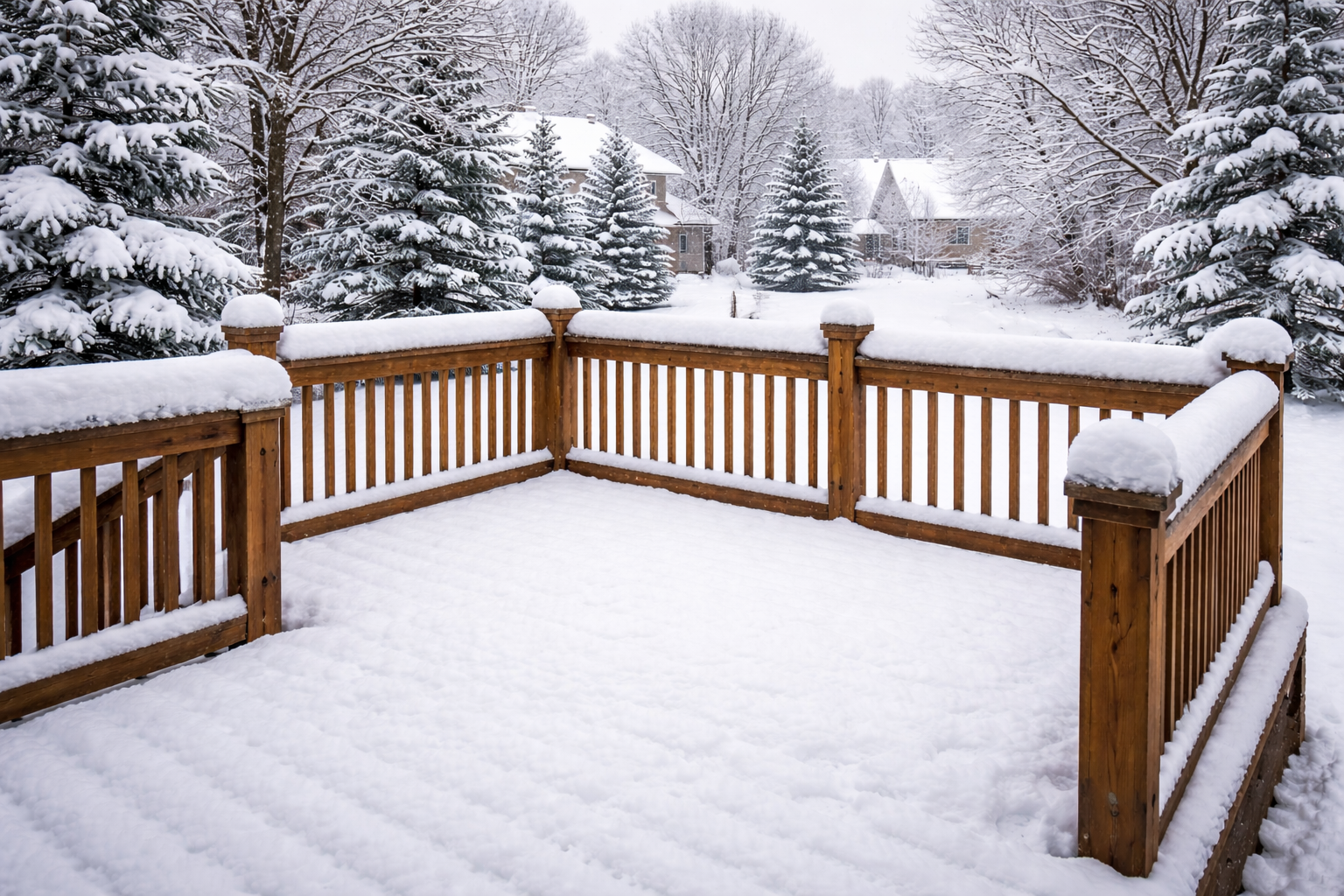
In Minnesota, deck season fills up fast. While winter may still be hanging on, February is one of the most important months for homeowners who want their deck ready for spring and summer. From graduation parties and weddings to backyard gatherings, decks with hard deadlines require early planning, long before the first warm day arrives.

Twin Cities Resurfacing specializes in professional deck refinishing and deck staining throughout Minneapolis, Saint Paul, and the surrounding Twin Cities metro. With over 18 years of experience restoring decks in Minnesota’s demanding climate, we know that homeowners who plan early get better scheduling, better results, and far less stress when the season begins.

Why February Is the Best Time to Schedule Deck Work

Deck staining and refinishing in Minnesota is highly seasonal, and availability becomes limited quickly once spring arrives.

Scheduling your deck project in February allows you to:

📅 Secure preferred spring scheduling
🎓 Plan around graduation parties and summer events
🌱 Be first in line when weather conditions allow
🛠 Avoid rushed prep or last-minute decisions
📋 Receive expert recommendations without pressure

Every year, Twin Cities Resurfacing hears from homeowners who waited until April or May, only to discover that prime deck refinishing dates were already booked. February planning ensures your deck is completed on your timeline, not someone else’s.

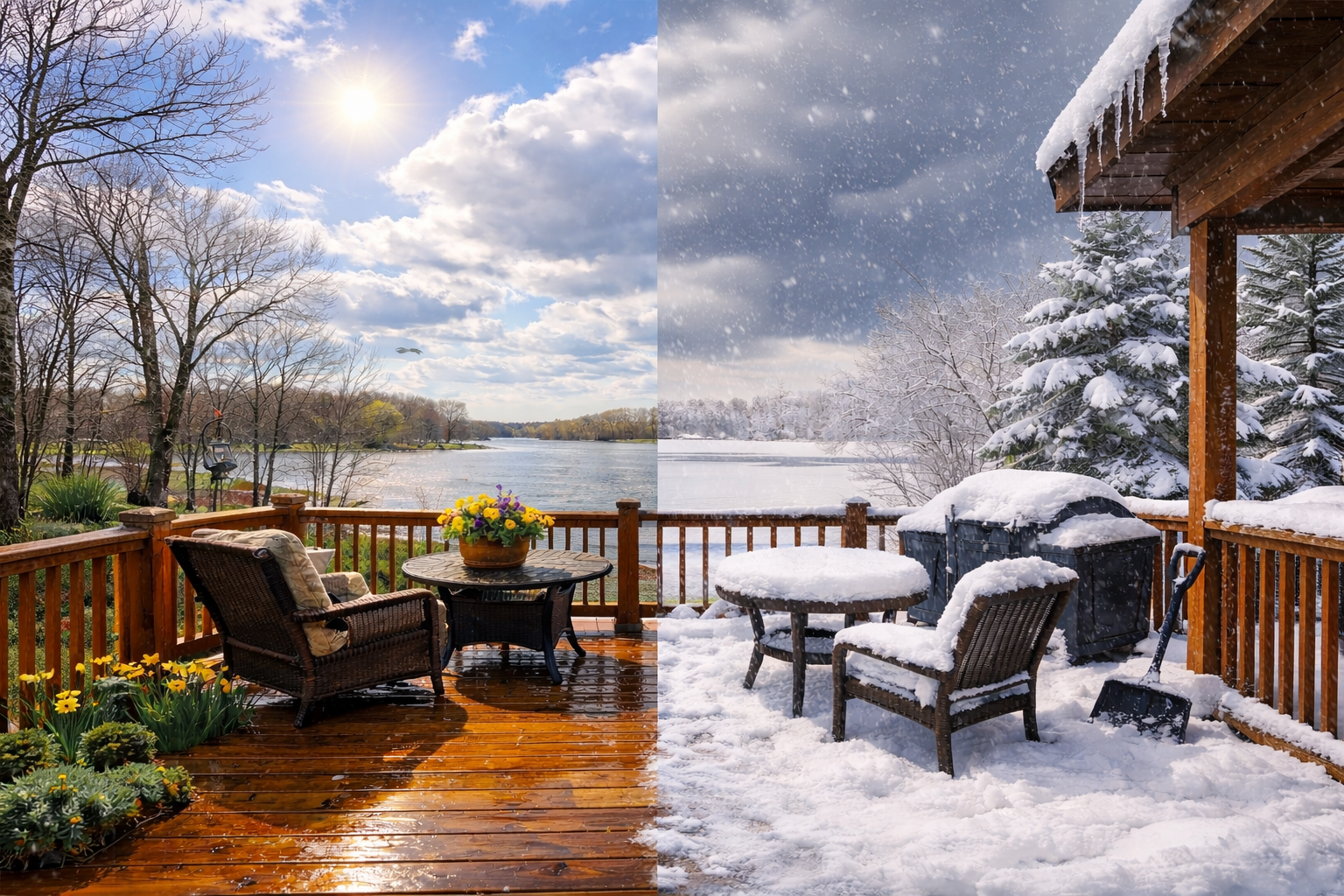
Minnesota Winters Take a Serious Toll on Decks

Even if your deck looks “fine” after winter, hidden damage is common.

Minnesota decks must endure:

❄️ Freeze–thaw cycles that stress and crack wood
🌨️ Snow and ice that trap moisture for months
💧 Spring snowmelt that penetrates worn stain
🌲 Shaded areas that promote mildew and rot

As deck refinishing specialists, Twin Cities Resurfacing sees winter damage every spring, cracked boards, failing stain, and moisture issues that worsen quickly once temperatures rise. Early planning allows time to evaluate damage and choose the correct solution before problems escalate.

Deck Services to Consider Before Spring

Not every deck requires the same level of care. Understanding your options early leads to better outcomes.

Professional Deck Washing

Best for: Newer decks or routine maintenance

What it includes:

  • Professional deck washing to remove dirt, algae, mildew, and winter residue

Pros:
✔ Improves appearance
✔ Helps prevent organic buildup
✔ Cost-effective maintenance option

Cons:
✖ No protection from moisture or UV damage
✖ Does not restore worn stain

Deck washing is often a starting point for homeowners searching for deck cleaning services in the Twin Cities before the outdoor season begins.

Wash & Stain

Best for: Decks with solid wood and faded or worn stain

What it includes:

  • Deep cleaning

  • Professional deck staining using products designed for Minnesota conditions

Pros:
✔ Restores color
✔ Protects against moisture and UV exposure
✔ Extends deck lifespan

Cons:
✖ Not suitable for some peeling or failing coatings

As deck stain experts, Twin Cities Resurfacing helps homeowners choose stains that perform in Minnesota’s extreme climate, not products that look good for one season and fail the next.

Wash, Strip & Stain

Best for: Decks with peeling, flaking, or uneven stain

What it includes:

  • Cleaning

  • Chemical stripping of old stain

  • Application of wood brightener

  • Professional application of oil based stain.

Pros:
✔ Removes failing coatings
✔ Creates a clean surface for new stain
✔ Dramatic visual improvement

Cons:
✖ More labor-intensive
✖ Requires professional experience

This service is common for homeowners searching for deck stripping and deck staining in Minnesota who want long-lasting results, not temporary fixes.

Full Deck Refinishing (Wash, Strip, Sand & Repair)

Best for: Older decks or decks needing full deck refinishing in the Twin Cities

What it includes:

  • Power washing

  • Complete stain removal

  • Sanding to restore smooth wood

  • Board and fastener repairs

  • Professional stain application

Pros:
✔ Restores deck close to new condition
✔ Improves safety and durability
✔ Longest-lasting results

Cons:
✖ Higher upfront investment

This is where Twin Cities Resurfacing truly stands out. As deck refinishing specialists, we focus on proper prep, correct products, and proven processes, so decks last through Minnesota winters, not just summer.

Hard Deadlines Require Early Scheduling

If your deck needs to be ready by a specific date, February planning is critical.

Each year, homeowners contact us with:

“We have a graduation party in June can the deck be done in time?”

The answer depends on when the schedule is set. Graduation season fills quickly, and decks requiring stripping, sanding, or repairs take additional time. Homeowners who schedule early have the best chance of meeting firm deadlines without compromise.

If your deck needs to be ready for:

🎓 Graduation parties
🎉 Summer gatherings
💍 Weddings
☀️ Outdoor entertaining

Early scheduling provides peace of mind.

Our Easy, Hassle-Free Deck Estimate Process

Twin Cities Resurfacing makes early planning simple.

We offer same-day or 24-hour deck estimates throughout the Minneapolis-Saint Paul metro, often without an on-site visit.

How It Works
Send a few photos of your deck, including:

  • Wide shots from the ground

  • Photos of all sides

  • Deck floor surface

  • Close-ups of any problem areas

Wide photos work best. They allow us to accurately evaluate layout, condition, and scope.

Many homeowners searching for deck refinishing estimates in Minnesota are surprised how quick and accurate this process is even during winter.

Service Areas: Minneapolis–Saint Paul Metro

Twin Cities Resurfacing proudly provides professional deck refinishing and deck staining services in:
Minneapolis, Saint Paul, Bloomington, Edina, Minnetonka, Eden Prairie, Maple Grove, Plymouth, Woodbury, Eagan, Burnsville, Lakeville, Blaine, and surrounding Minnesota communities.

If you’re searching for deck refinishing near me, deck staining in the Twin Cities, or experienced deck stain experts, our team is ready to help.

Why Choose Twin Cities Resurfacing

For over 18 years, Twin Cities Resurfacing has been a trusted name in deck refinishing and deck staining across Minnesota.

Homeowners choose us because we offer:
✔ Specialized deck refinishing expertise
✔ Proven stain systems for Minnesota weather
✔ Honest, experience-based recommendations
✔ Long-lasting, professional results

From routine staining to full deck restoration, we focus on protecting your deck—not just making it look good for one season.

👉 Learn more or request an estimate HERE.

Final Thoughts

February may feel early, but when it comes to deck refinishing in Minnesota, early planning makes all the difference.

If your deck needs to be ready for spring, summer, or a hard deadline like a graduation party, now is the time to get on the schedule. Homeowners across Minneapolis, Saint Paul, and the Twin Cities trust Twin Cities Resurfacing for expert deck staining and refinishing, built to last in Minnesota’s climate.

The #1 Deck Cleaning Mistake We See: Pressure Washing That Damages the Wood

If you’re a homeowner in Minnesota, there’s a good chance you’ve looked at your deck and thought:

“Honestly… I could just pressure wash it.”

And we get it. Pressure washing seems like the fastest way to clean a deck, especially after a long winter or a wet spring when everything looks dirty and faded.

But here’s the truth:

High-pressure washing is one of the most common reasons decks end up looking worse, not better.

In this blog, we’ll explain what pressure washing actually does to wood, the warning signs that a deck has been damaged, and the safer way to clean a deck so it’s ready for staining or refinishing.

Why Pressure Washing Seems Like the Right Move (At First)

Most homeowners aren’t trying to cut corners — they’re just trying to solve a problem quickly.

Pressure washing feels like a good solution because it:

  • Removes visible dirt fast

  • Makes the deck look “clean” right away

  • Is easy to rent or buy

  • Feels like a good prep step before staining

But decks are different than concrete or siding. Wood is softer, more porous, and much easier to damage.

What High Pressure Actually Does to a Deck

When pressure is too high (or the tip is too aggressive), the water doesn’t just clean the deck — it starts tearing it apart.

Here are the biggest problems we see:

  1. It Tears Up the Wood Grain

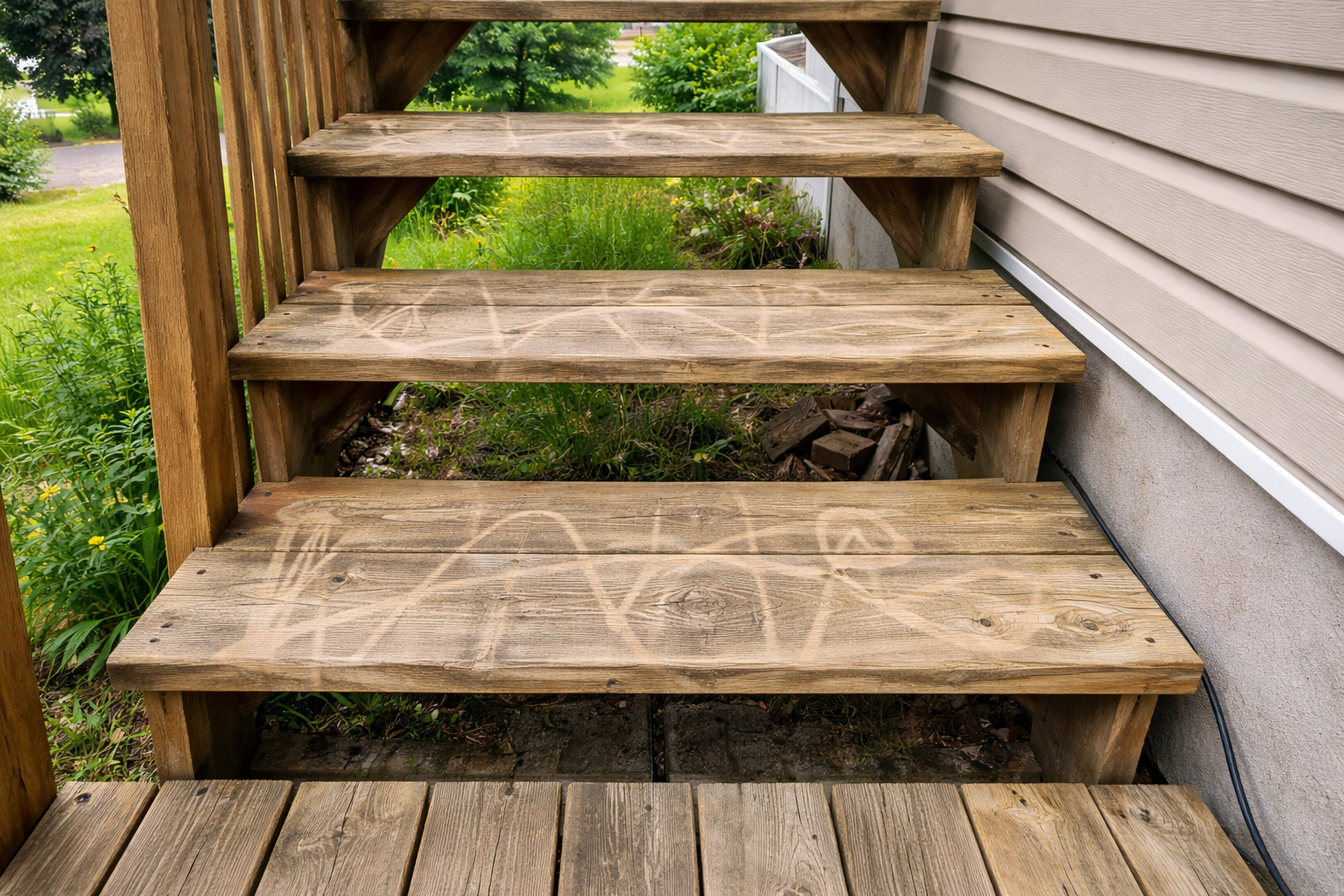
    High pressure can literally rip into the wood fibers. That can leave grooves, striping, and an uneven surface that’s hard to fix without sanding.

  2. It Leaves the Deck Surface “Fuzzy”

    This is one of the biggest giveaways. Instead of a smooth surface, the deck feels rough and hairy — almost like the wood is fraying.

    That fuzzy surface:

    • Doesn’t feel good under bare feet

    • Absorbs stain unevenly

    • Wears down faster over time

  3. It Creates Uneven Marks and “Clean Lines”

    If you stop moving for even a second, you can leave visible lines or marks.

    We often see:

    • Zebra striping

    • Swirls

    • Clean spots and dirty spots

    • Darker grooves where the pressure lingered

      Even if the deck looks “clean,” it may not look even.

  4. It Shortens the Life of the Boards

    Wood decks are built to last, but blasting them with high pressure can speed up deterioration by damaging the protective surface layer of the wood.

    That can lead to:

    • Faster drying and cracking

    • More splintering

    • Quicker fading after staining

    • More frequent maintenance

Signs Your Deck Has Been Pressure Washed Too Aggressively

Not sure if a deck has been damaged? Here are common signs we see in Minnesota:

  • Rough, splintery boards afterward

  • Visible “lines” across the deck boards

  • Raised wood grain

  • Uneven color

  • Stain soaking in blotchy or dark in certain areas

  • Boards that look worn down in spots

If you’re planning to stain and your deck already looks like this, staining without proper prep usually makes the problem stand out even more.

Why This Matters Before Deck Staining

A lot of people pressure wash because they’re getting ready to stain. But here’s the issue… damaged wood doesn’t stain evenly.

Instead of getting a smooth, consistent finish, you may end up with:

  • Dark blotches

  • Light patches

  • Rough texture that shows through

  • Stain that doesn’t last as long

So while pressure washing might look like “prep,” it can actually create more work (and worse results) later.

The Better Way to Clean a Deck (Without Damaging It)

When we clean decks, we don’t rely on blasting the surface with high pressure. We focus on professional cleaning agents and low-pressure washing. That approach is safer for the wood and sets the deck up for a better finish.

Our Professional Deck Cleaning Method

Here’s what that looks like:

  1. Protect landscaping and the home: We take care to protect plants, siding, doors, windows, patios, and nearby surfaces.

  2. Apply cleaning agents first: Cleaning agents do the heavy lifting — loosening dirt, grime, and organic growth so it can be removed without harsh pressure.

  3. Wash with low pressure: Low pressure is strong enough to rinse and clean, but gentle enough to avoid tearing up the wood fibers.

  4. Brighten the wood: A brightener helps restore the wood’s tone and leaves the surface ready for staining.

Can You Pressure Wash a Deck Safely?

Sometimes, yes — but it takes experience and the right setup.

The problem is most homeowners:

  • Use too much pressure

  • Get too close to the boards

  • Use the wrong tip

  • Stay in one spot too long

  • Don’t brighten afterward

So while it’s possible, it’s also easy to damage the deck without realizing it until it’s too late.

If Your Deck Already Has Pressure Washing Damage, What Now?

If the deck has been roughened up or left uneven, the next step depends on how bad it is.

Options may include:

  • Brightening to improve tone

  • Sanding (if requested or needed)

  • Refinishing to restore appearance before staining

The goal is always the same: Get the wood back to a clean, even surface so the stain looks great and lasts.

Deck Cleaning in the twin cities (Done the Right Way)

If your deck is looking dirty, gray, or overdue for staining, we can help you clean it the safe way — without damaging the wood.

We use professional cleaning agents and low-pressure washing to protect the deck and prepare it for a longer-lasting finish.

Request a free estimate today.