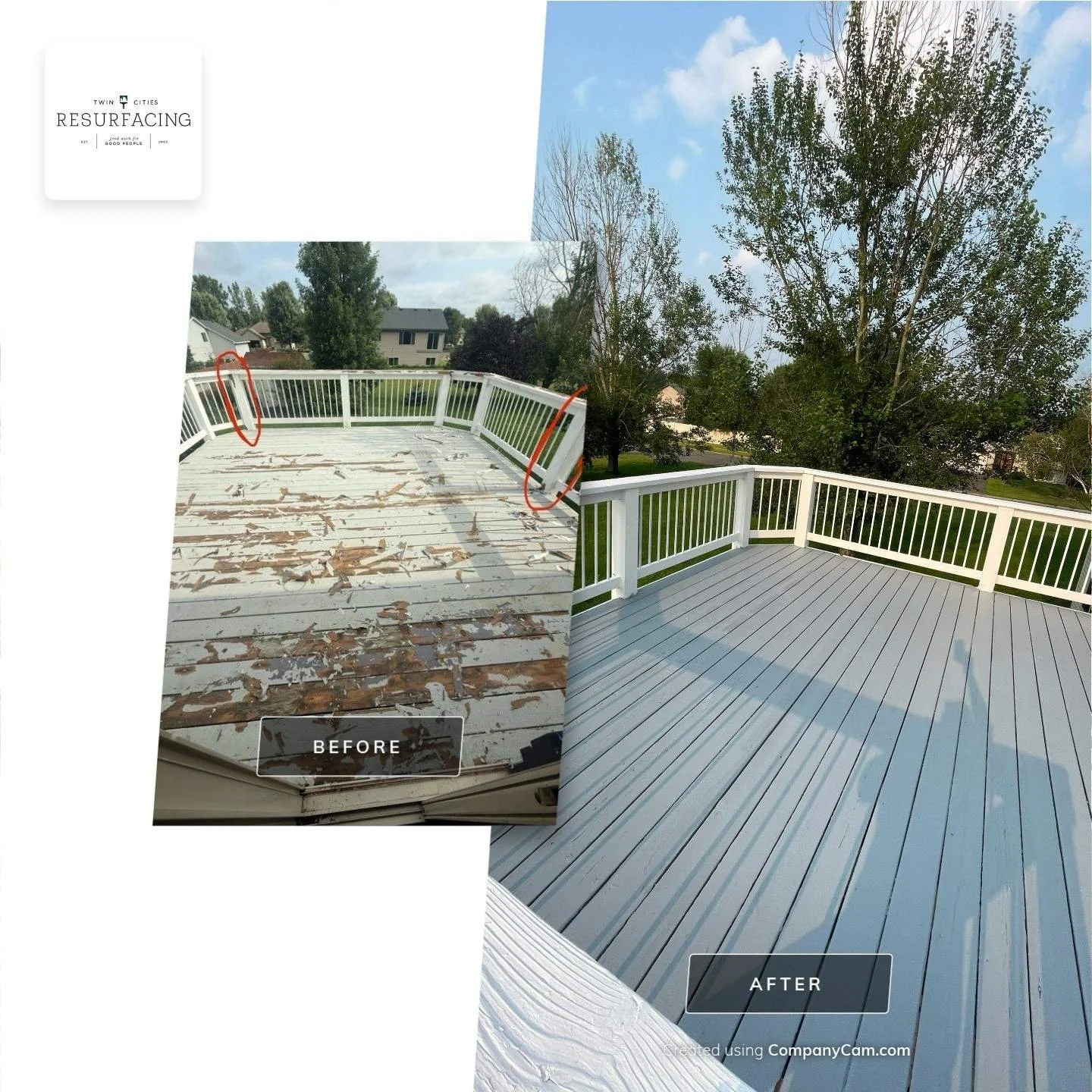
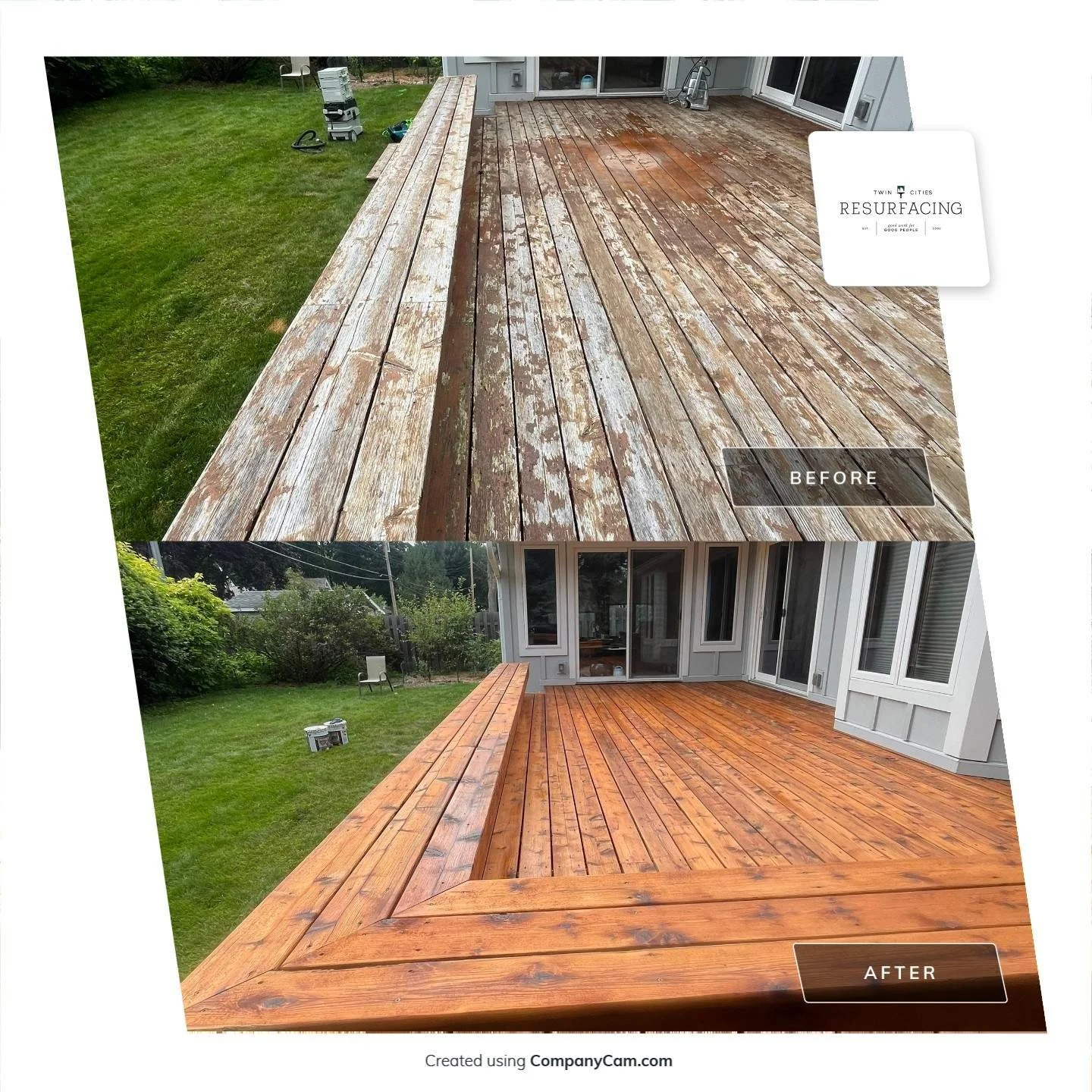
Searching for a deck staining or refinishing contractor and not sure how to tell the experienced professionals from the ones who will leave you with a peeling mess before summer is over?
As deck refinishing specialists who have been working across Minneapolis, Saint Paul, and the Twin Cities metro for more than 18 years, here is what we recommend homeowners look for — and watch out for — when hiring a contractor.
What to Look for in a Deck Refinishing Contractor
1. They Take Preparation Seriously
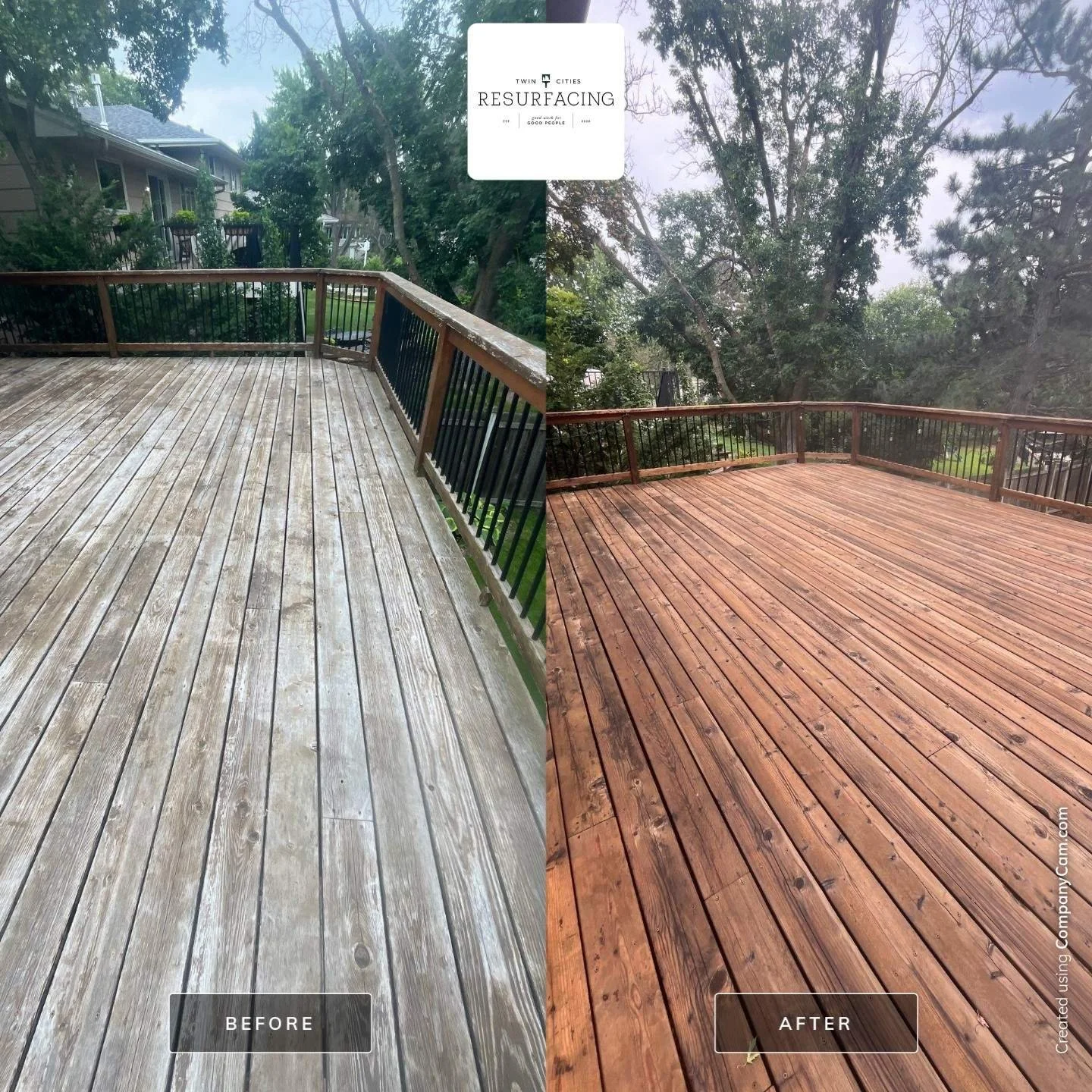
The single biggest factor in how long a deck staining job lasts is not the stain, it is the preparation. A contractor who skips proper cleaning, rushes through stripping old product, or does not check wood moisture before applying stain is setting up the project to fail early.
Ask directly: what does your preparation process include? The answer should be specific and detailed.
2. They Use Professional-Grade Products
There is a meaningful difference between stains available at a hardware store and the professional penetrating oil systems that experienced contractors use.
Products like Ready Seal, TWP, Armstrong Clark, and Defy Extreme are formulated to penetrate wood fibers rather than sit on top, which means they fade gradually instead of peeling. In Minnesota's climate, this distinction matters significantly.
Ask what product will be used and why. A contractor who cannot answer that question specifically is worth reconsidering.
3. They Have Real Local Reviews
Google reviews from actual customers in the Twin Cities carry more weight than anything you will read on a contractor's own website. Look for a consistent pattern of reviews that describe the work specifically, prep process, crew behavior, how the deck held up the following season.
A long track record of detailed reviews from homeowners in your area is a strong indicator of consistent quality.
4. Their Estimates Are Detailed and Written
A professional estimate should clearly describe what preparation will be performed, what product will be applied, how many coats, and what is included versus what costs extra.
A single-line quote with no explanation makes it impossible to compare contractors fairly, or to hold anyone accountable if the job does not go as expected.
5. They Carry Insurance
Any contractor working on your property should carry general liability insurance. This protects you if something goes wrong during the job.
Do not hesitate to ask for proof. A professional company will provide it without hesitation.
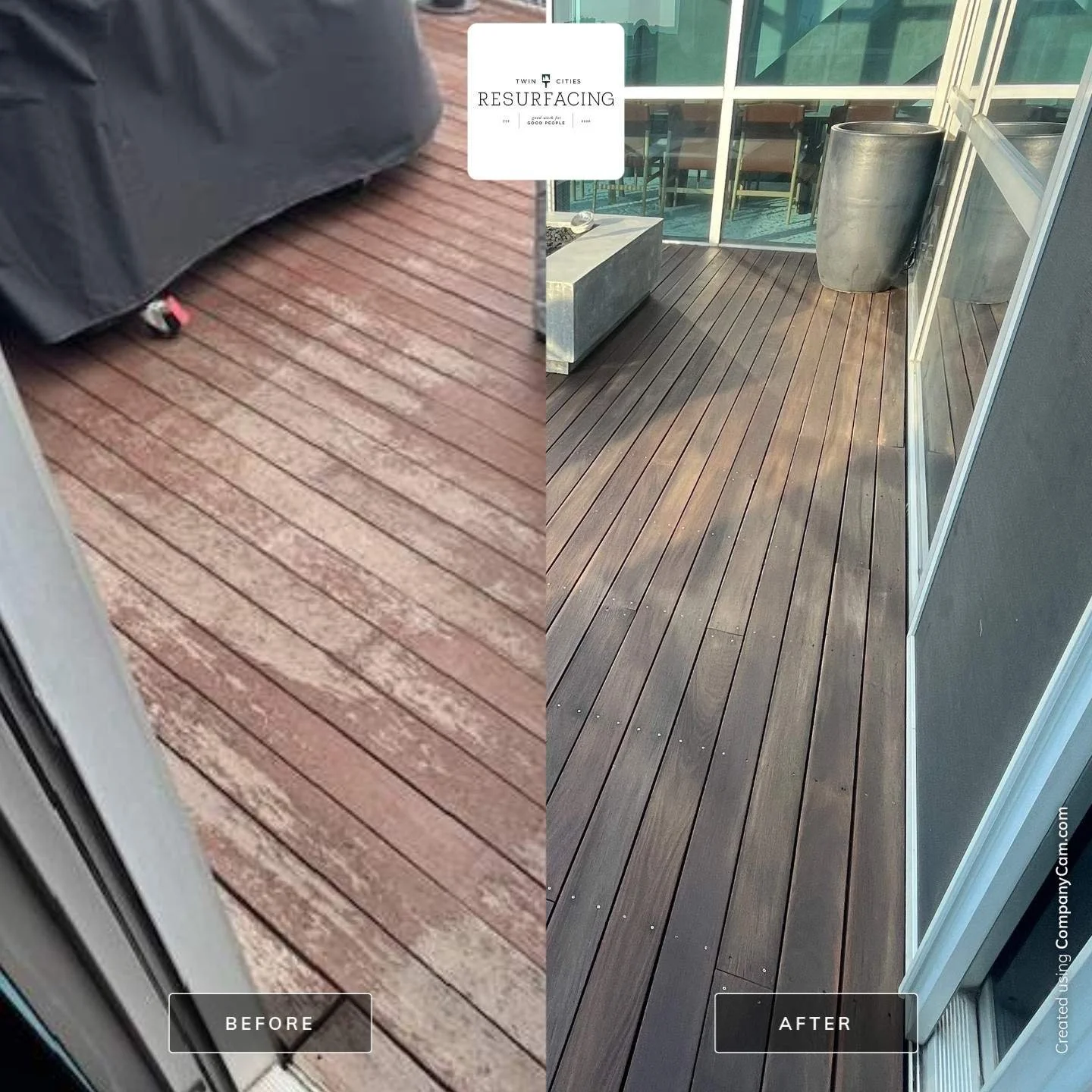
Questions to Ask Before Hiring
What does your prep process include - washing, sanding, stripping, or a combination?
What specific stain product do you use, and why do you recommend it for my deck?
How many coats will you apply?
Do you handle board replacement if we find rot during prep?
Are you licensed and insured in Minnesota?
What does your estimate include, and what is not covered?
Can you provide references from recent projects in my area?
Red Flags to Watch For
A Quote That Seems Too Low
Unusually low bids typically mean one of three things: shortcuts on preparation, low-grade product, or workers without proper training or insurance coverage.
No Written Estimate
A handshake agreement with no documentation leaves you with no recourse if the work falls short of expectations. Always get it in writing.
Pressure to Decide Immediately
Reputable contractors have busy schedules and do not need to pressure homeowners into signing on the spot. Walk away from anyone who does.
Thin or Missing Online Presence
A company that has been doing quality work in the Twin Cities will have a visible digital footprint- reviews, a real website, and a history of completed projects.
They Recommend Paint Instead of Stain
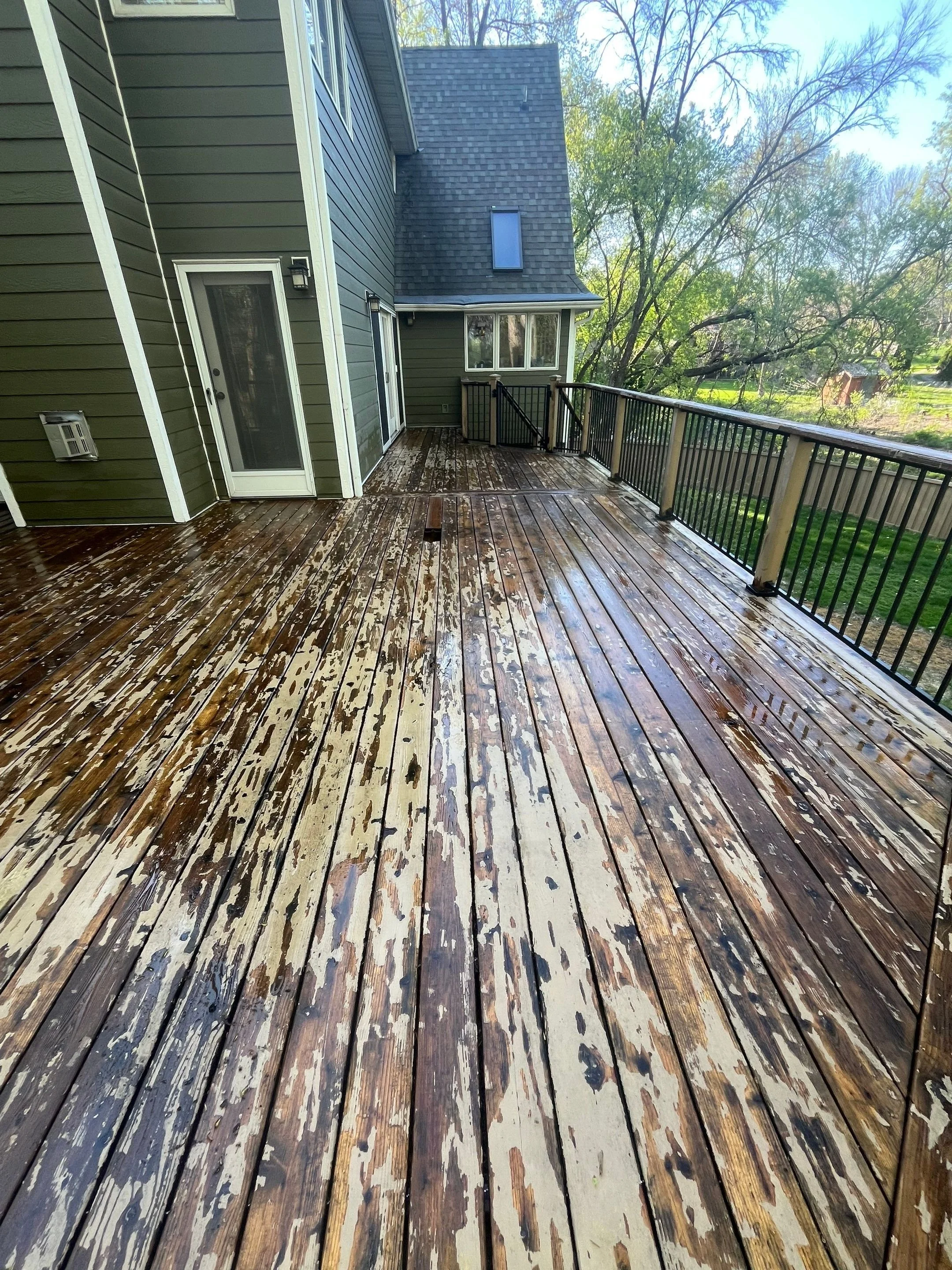
Paint traps moisture and peels dramatically under Minnesota freeze-thaw cycles. A specialist in deck refinishing will almost always recommend a quality penetrating stain over paint for horizontal deck surfaces.
How Our Estimate Process Works
At Twin Cities Resurfacing, we have designed our estimating process to be as straightforward as possible.
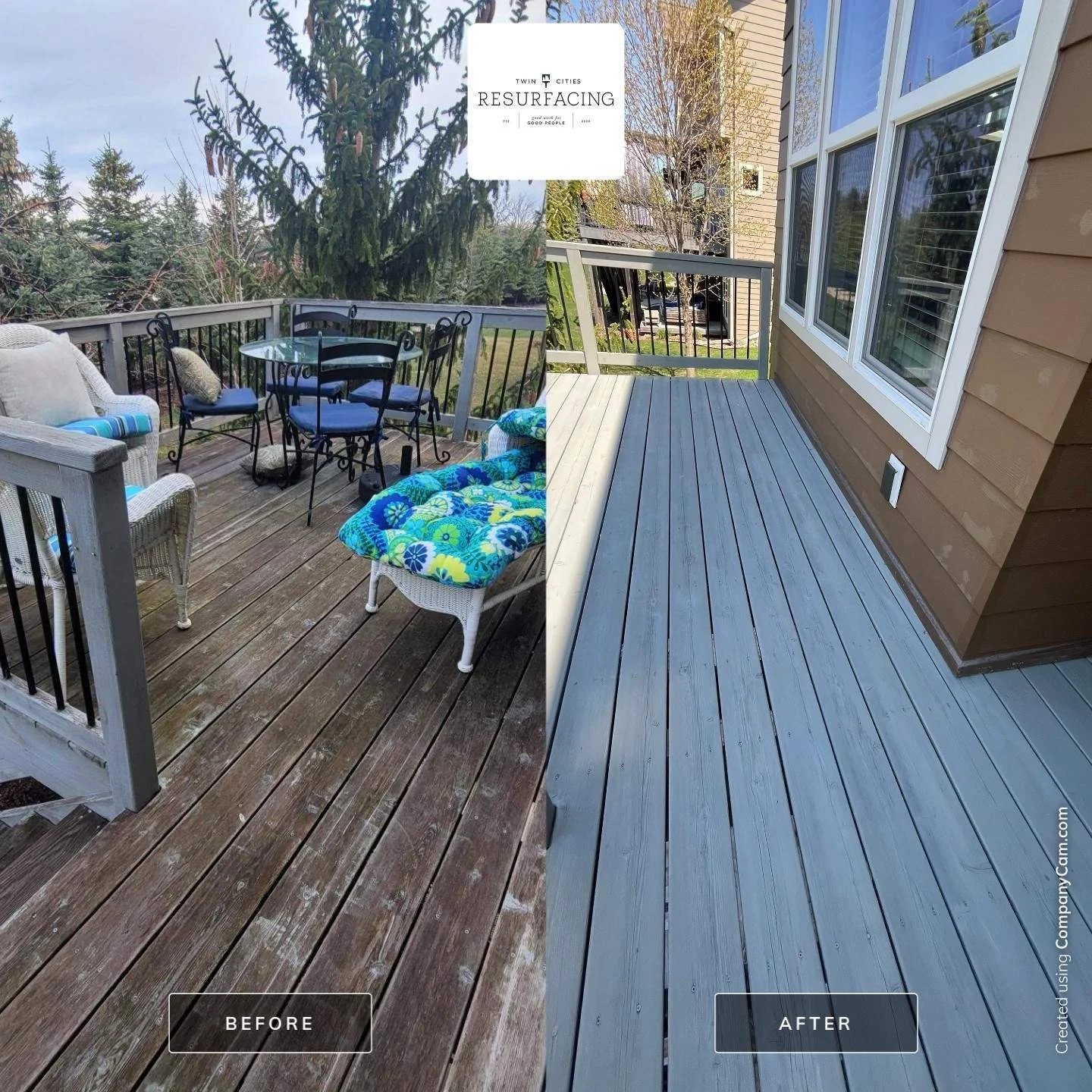
In many cases, homeowners can receive a same-day or 24-hour estimate by sending photos of their deck. We review the photos, assess the condition and scope, and provide a detailed written quote.
Helpful photos to send include:
Wide shots of the full deck from multiple angles
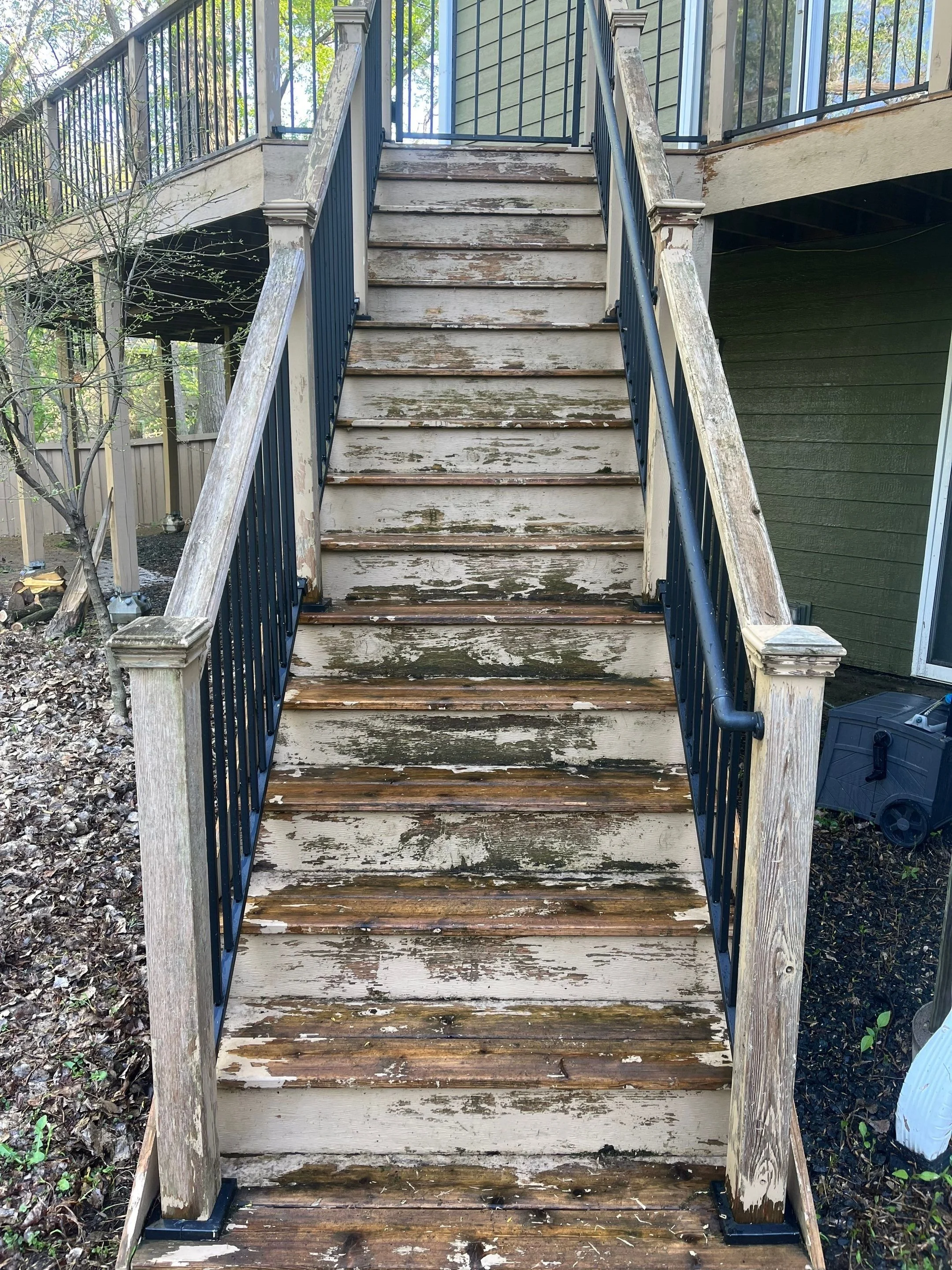
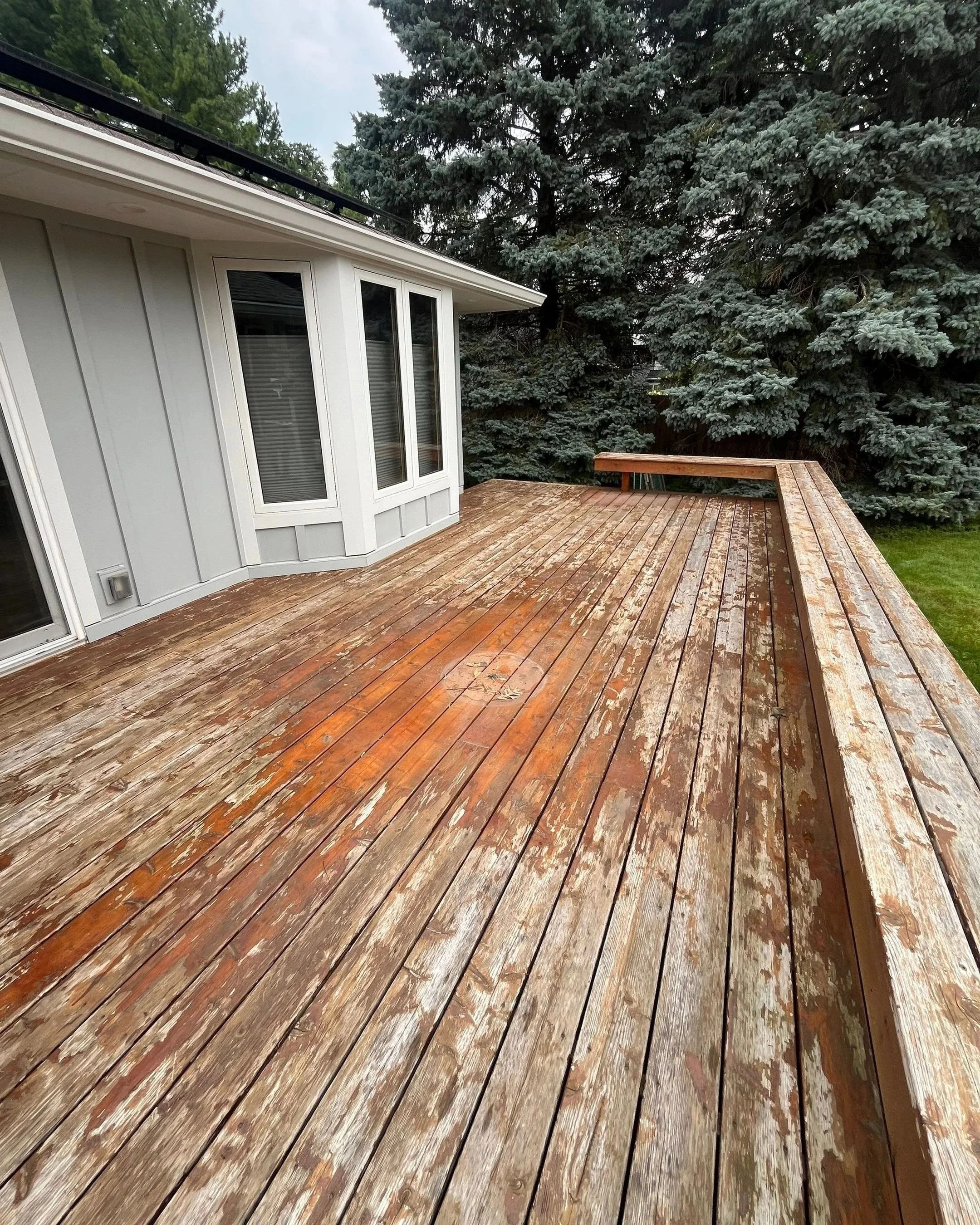
Close-ups of any areas with wear, peeling, or soft spots
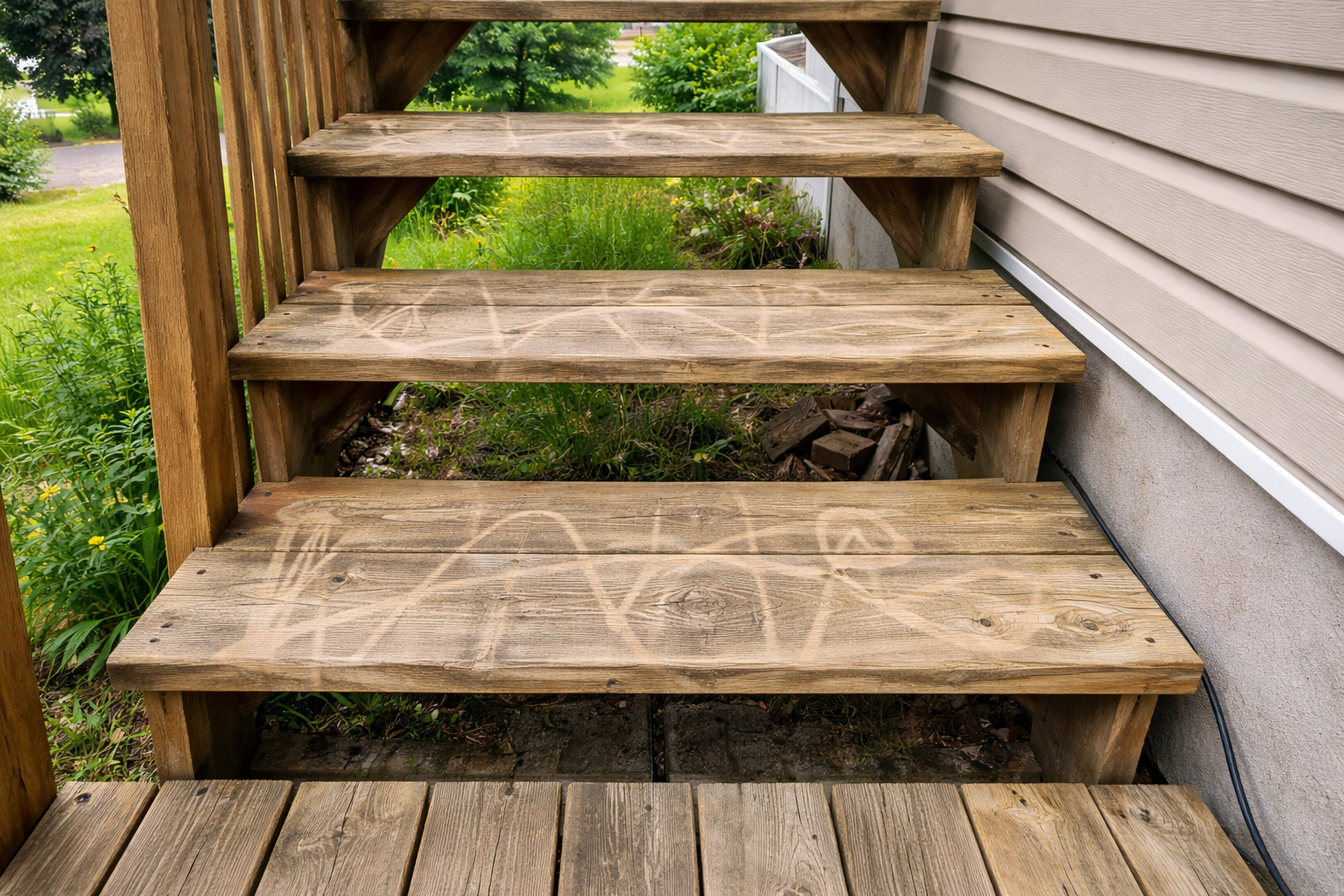
Photos of railings and stairs
Deck Staining Specialists Serving the Twin Cities
Twin Cities Resurfacing provides professional deck refinishing, deck staining, and fence staining throughout the Minneapolis–Saint Paul metro, including:
Minneapolis, Saint Paul, Bloomington, Edina, Minnetonka, Eden Prairie, Maple Grove, Plymouth, Woodbury, Eagan, Burnsville, Lakeville, Blaine, and surrounding Minnesota communities.
If you are searching for deck refinishing near me, deck staining companies near me, or professional deck restoration in Minnesota, our team is ready to help.
Why Choose Twin Cities Resurfacing
For more than 18 years, Twin Cities Resurfacing has specialized in restoring and protecting outdoor wood surfaces across the Twin Cities metro.
Homeowners trust us because we provide:
✔ Deck refinishing specialists with real experience
✔ Proven stain systems designed for Minnesota weather
✔ Professional preparation and cleaning methods
✔ Honest recommendations about timing and product selection
✔ Results designed to last through harsh Minnesota seasons
Final Thoughts
Finding a reliable deck refinishing contractor in the Twin Cities comes down to preparation practices, product quality, real local reviews, and clear written estimates.
If you are ready to get a straight answer on what your deck needs — and what it will cost — we make it easy to start.
Request a free estimate at tcrmn.com/request-estimate or call 612-594-3813.