DECK & FENCE STAINING GUIDE
There are 3 main types of stains/coatings that are crucial to understand when embarking on a deck, fence, pergola, or playset refinishing project. This might seem dramatic, but you can build a brand new deck and then completely ruin it by applying the wrong type of coating that will peel, flake and require near constant maintenance and upkeep. Spring and summer weather in Minnesota is PRECIOUS… and we want you to enjoy your deck, not be continually working on it.
Twin Cities Resurfacing provides professional deck refinishing, deck staining, and deck restoration services in Minneapolis, Saint Paul, and the surrounding Twin Cities metro area. Our process restores the beauty of wood decks while protecting them from Minnesota’s harsh climate.
While we hope you’ll choose to work with the pros here at Twin Cities Resurfacing, you should make sure to discuss coating options with whoever you hire to finish or refinish your deck. We have 20+ years of professional painting experience, so when it comes to paints, stains and other coatings, you can rest assured that we know what we’re talking about.
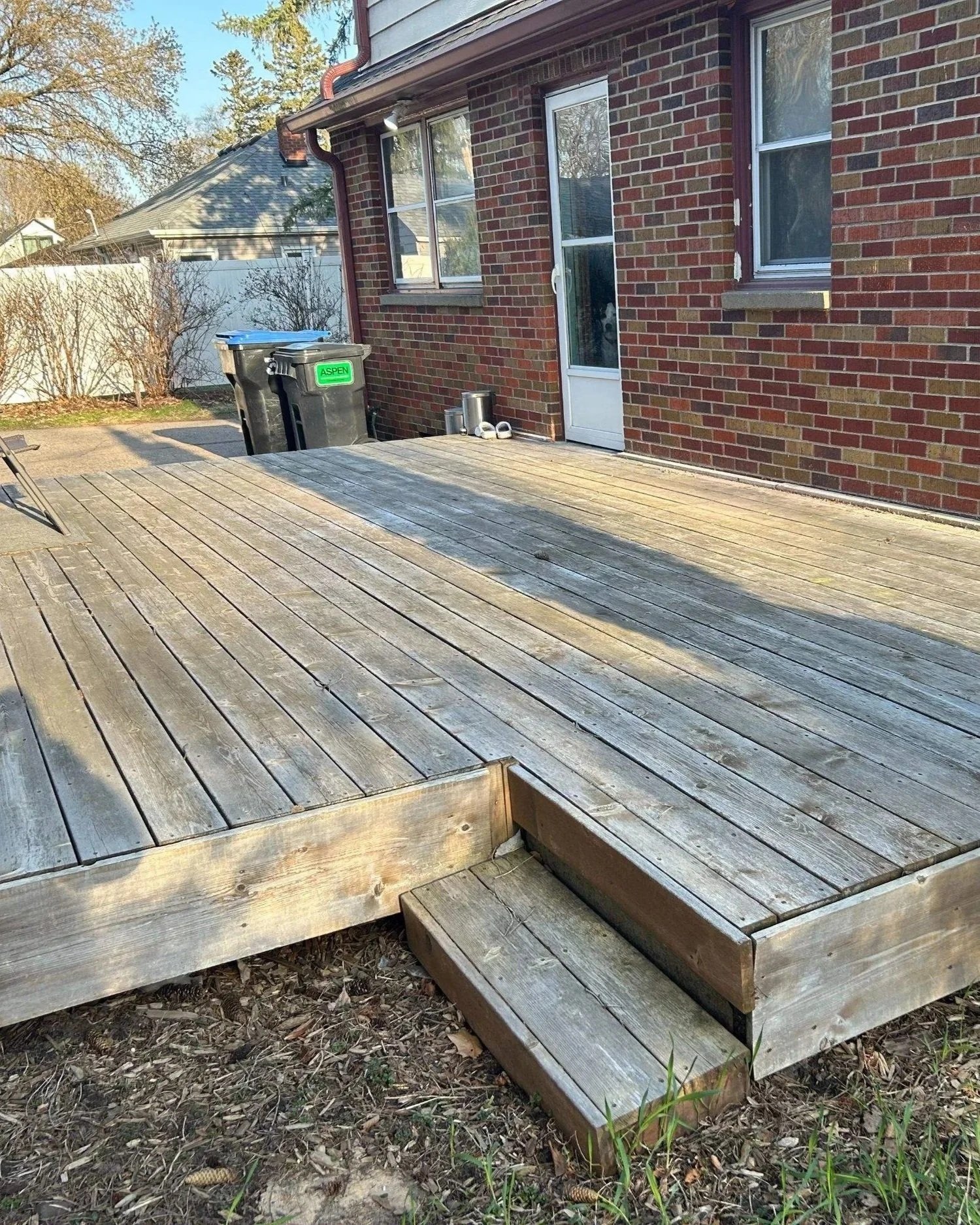
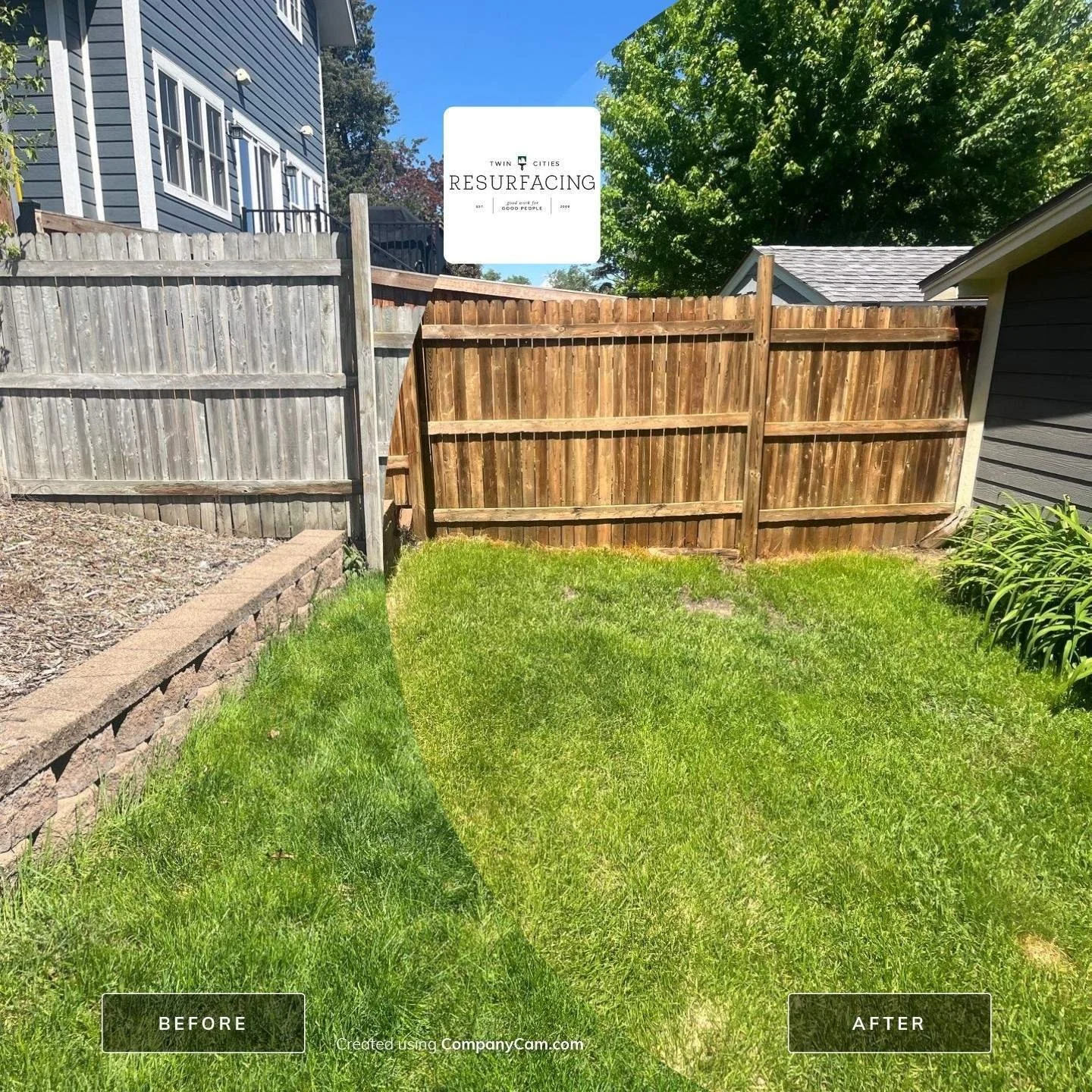
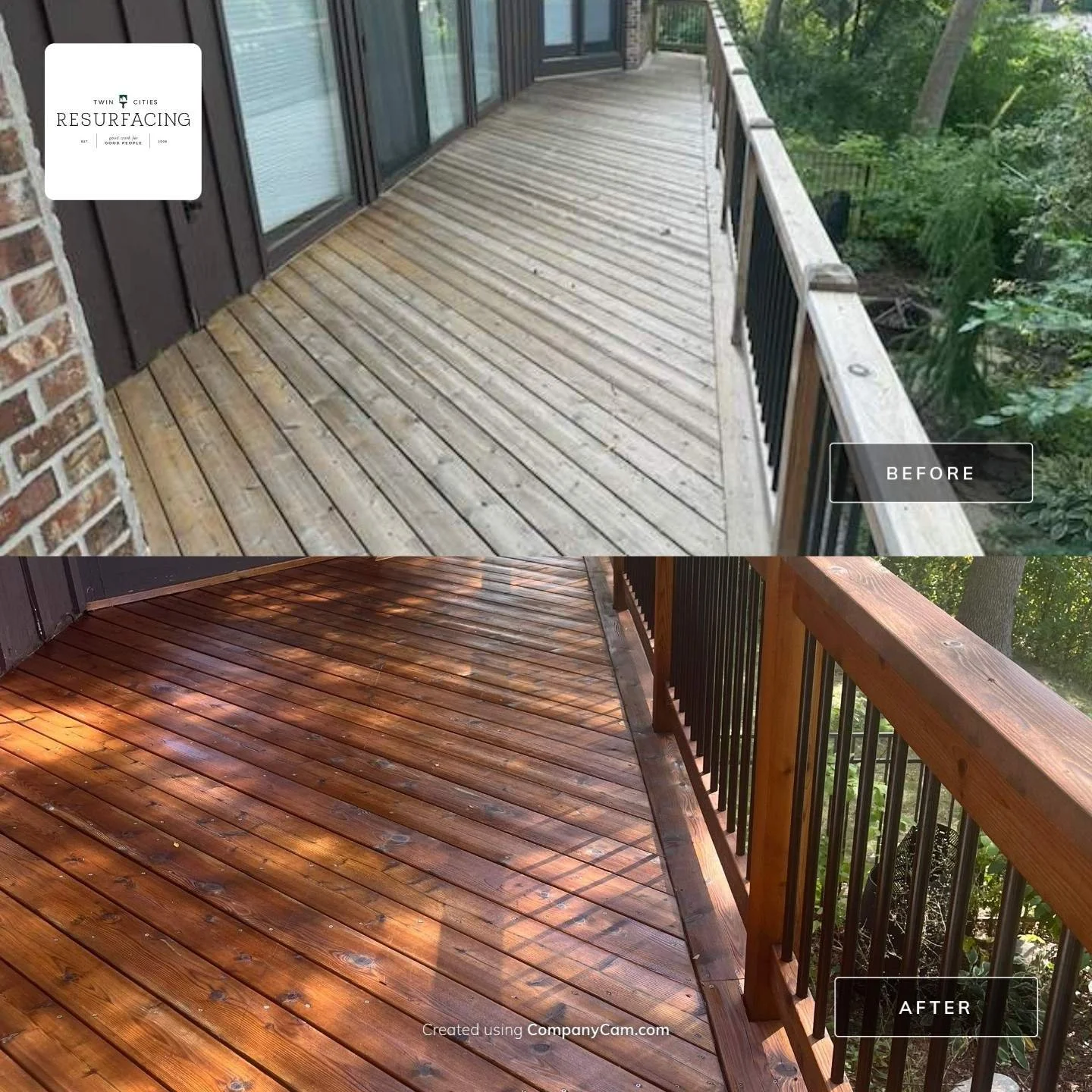
BEFORE: Penetrating Oil-Based Coating
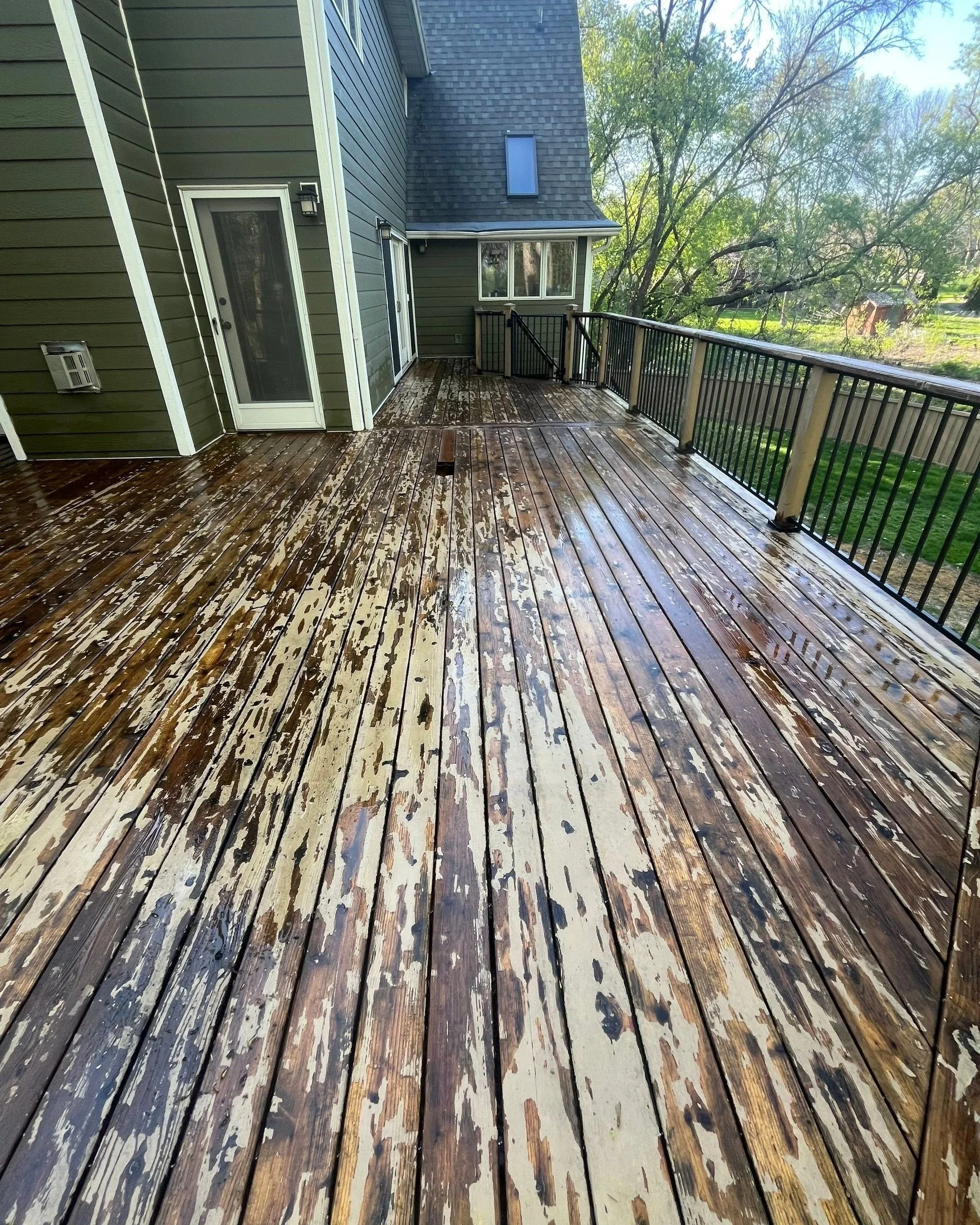
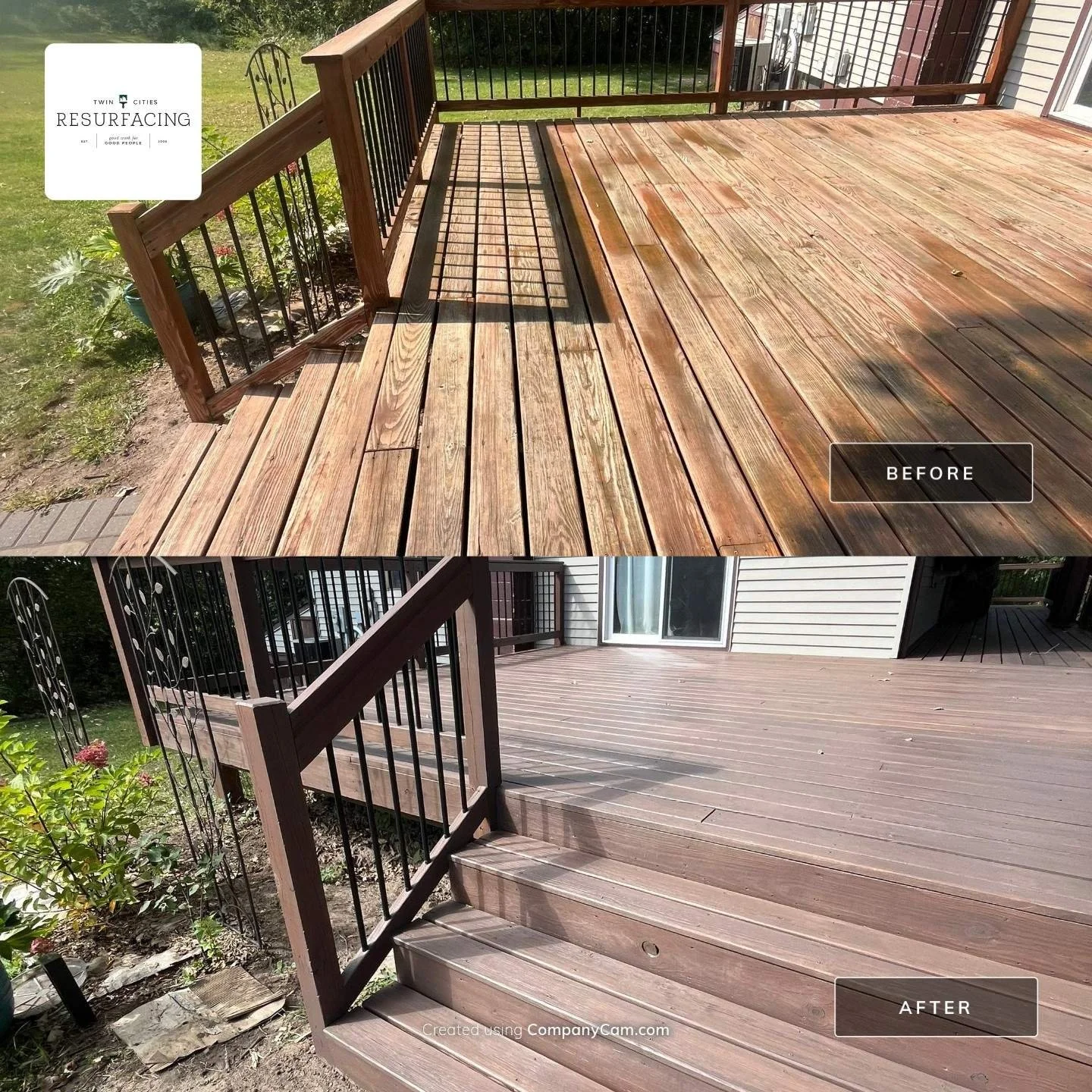
BEFORE: Water-Based Coating
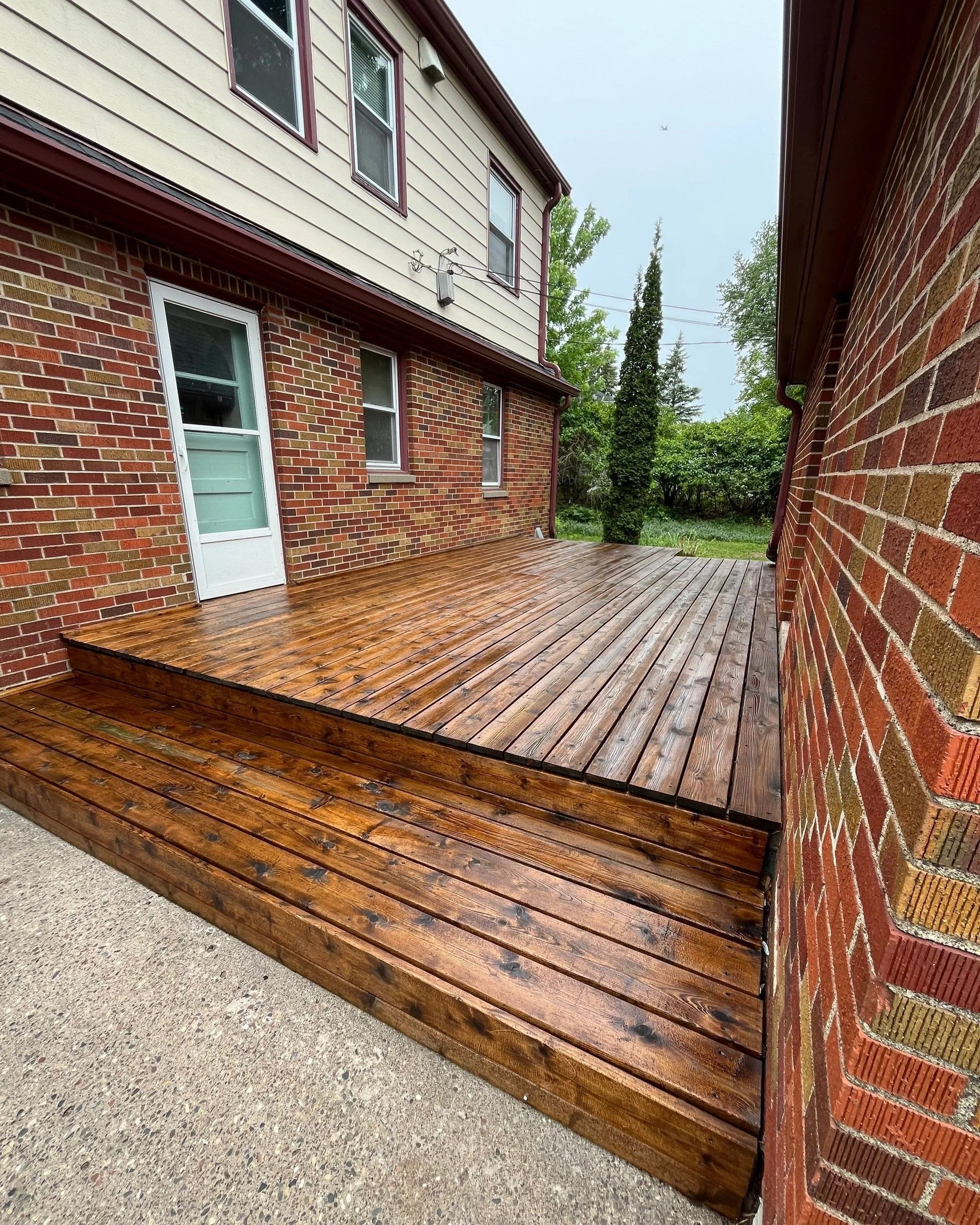
AFTER: Penetrating Oil-Based Coating
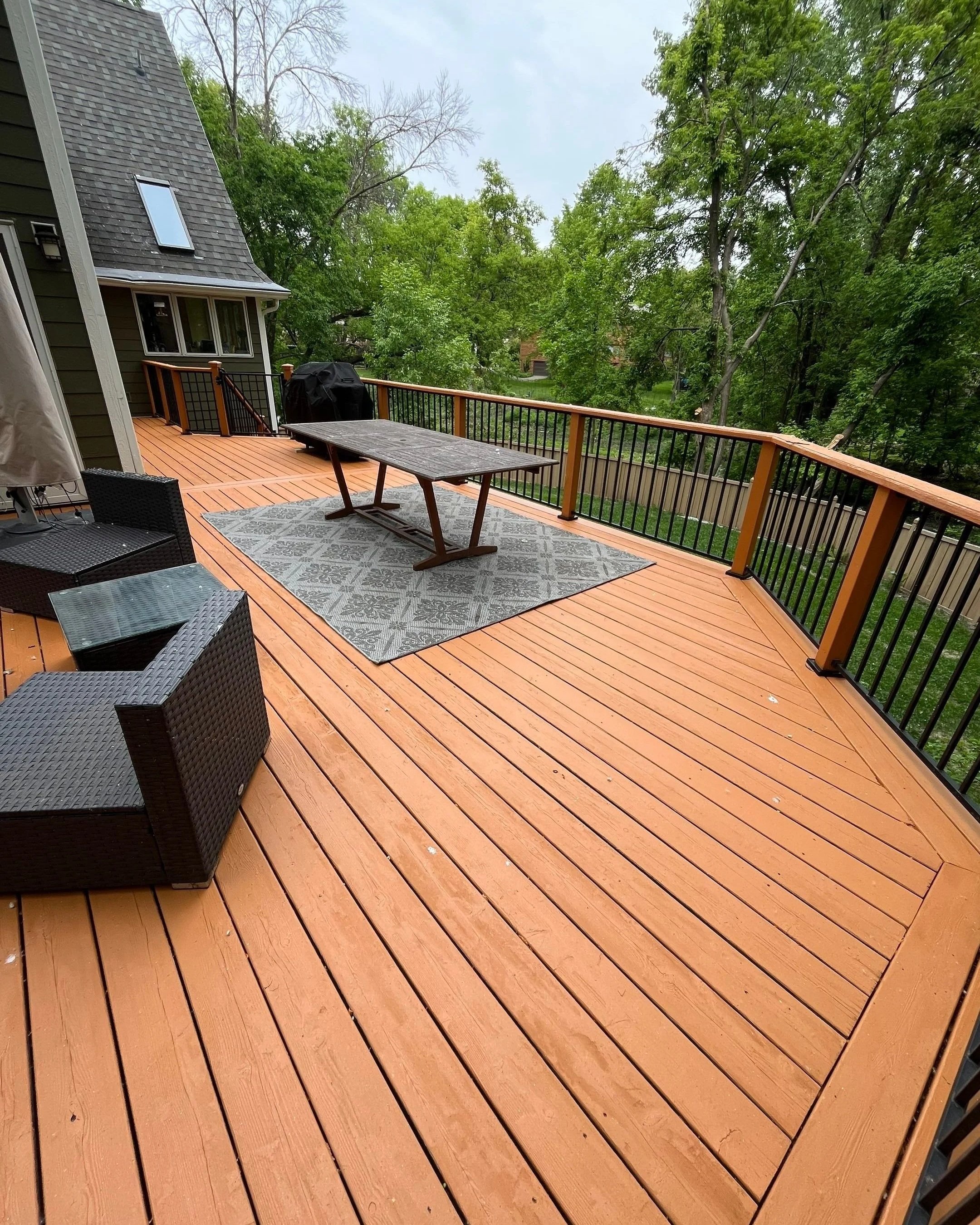
AFTER: Water-Based Coating
TYPES OF STAINS/COATINGS:
Penetrating Oil-Based Coatings:
- Penetrates the wood and leaves behind a stain pigment.
- Fades naturally over time but will not peel or flake.
- Easy maintenance involving light washing and re-staining, no stripping or sanding required.
- Typical lifespan: approximately 2-3 years before re-coating.
- Finish Options: Transparent (not-recommended), Semi-Transparent, Semi-Solid, Solid
Water-Based Coatings:
- Bonds to the surface and forms a film, similar to paint.
- Will peel or flake over time from weather and foot traffic.
- Once applied, you need to re-coat with water-based products unless the existing coating is fully removed.
- Typical lifespan: approximately 1 year on horizontal surfaces, 2-3 years on vertical surfaces.
- Finish Options: Transparent, Semi-Transparent, Semi-Solid, Solid
Film-Forming Oil-Based Coatings:
- Bonds to the surface and forms a film, similar to paint.
- Will peel or flake over time from weather and foot traffic.
- Requires periodic maintenance; if the coating breaks down before a maintenance coat is applied, the coating will need to be removed (sanding or chemical stripping) before reapplication of this or another type of coating (we will always recommend penetrating oil-based stain as the best option).
- Typical lifespan: can be as little as 6-12 months in harsh, full sun or high-traffic environments, or as long as 1-3 years.
- Finish Options: Transparent, Semi-Transparent, Solid
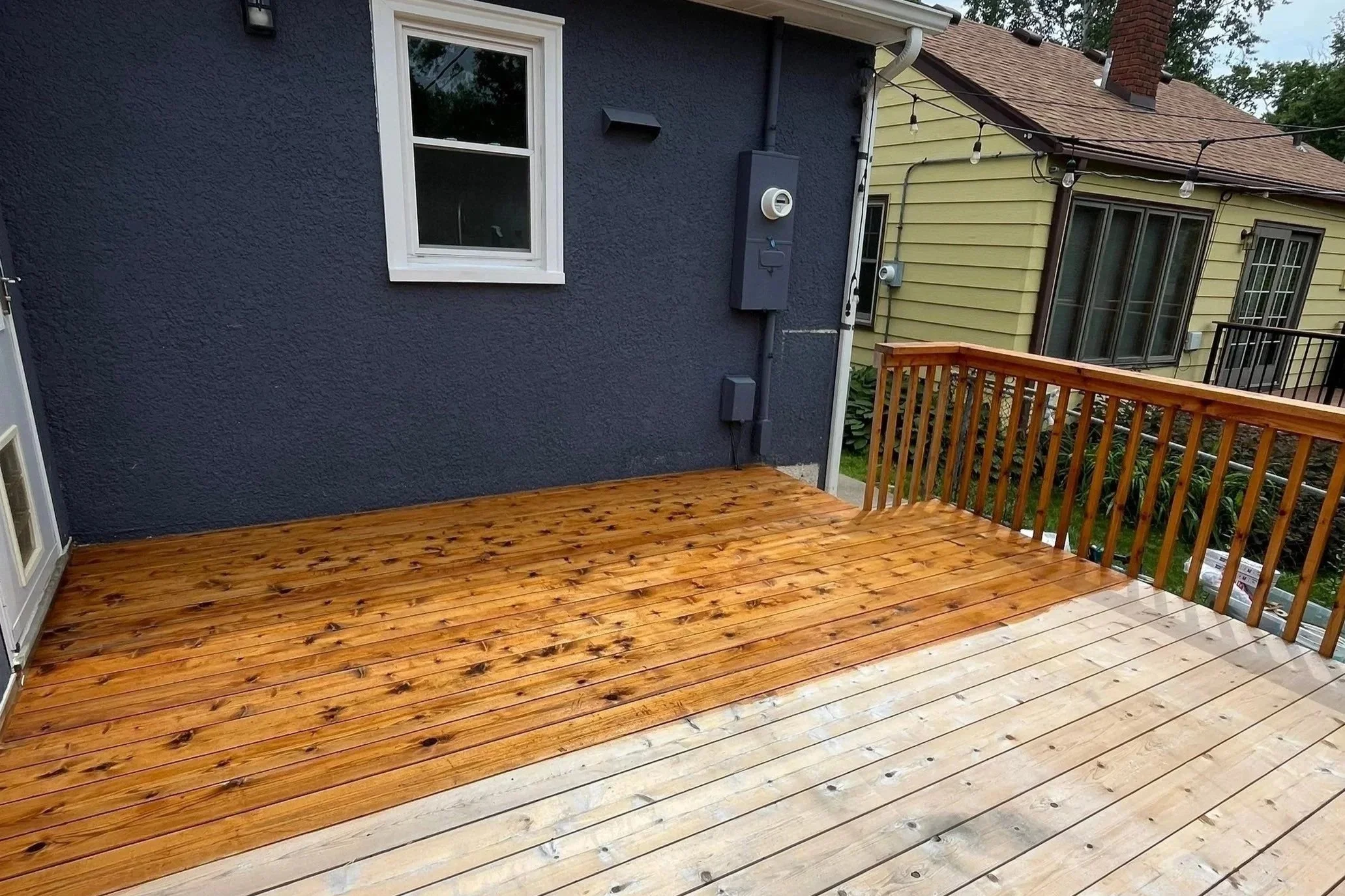
Why Staining Matters for Decks & Fences
Wood is a natural material that constantly expands and contracts as it absorbs and releases moisture. When wood is left unprotected, the elements slowly break down its structure.
Proper staining helps protect wood surfaces by:
• Reducing moisture penetration
• Slowing UV damage from sunlight
• Preventing premature cracking and splitting
• Preserving the natural color and character of the wood
Over time, untreated wood will turn gray as UV rays break down the surface fibers. Staining helps slow this process while maintaining the appearance and integrity of the wood.
How Wood Stain Protects the Wood Surface
Unlike paint, which creates a solid coating over wood, stain works by penetrating into the wood fibers themselves.
This penetration allows the stain to protect the wood while still allowing it to breathe naturally. A properly applied stain provides protection while maintaining the natural texture and appearance that homeowners want from wood decks and fences.
Because stain penetrates the wood surface rather than sealing it under a thick coating, it allows the wood to age more naturally while still receiving important protection against weather and moisture.
Why We Use PENETRATING OIL-based stain
The type of stain used is one of the most important factors in deck & fence refinishing.
Many DIY fence projects use water-based stains because they are easy to apply. However, these products often sit on top of the wood and eventually peel or flake.
Twin Cities Resurfacing always recommends using penetrating oil-based stains that soak deep into the wood fibers. This creates a natural finish that protects the wood without forming a surface film.
Benefits of oil penetrating stains include:
• No peeling or flaking
• Natural aging and fading
• Easier long-term maintenance
• Deeper protection against moisture and UV exposure

Signs That Stain Is Wearing Out
Over time, all wood stain will gradually wear down due to weather exposure.
Common signs that stain may be wearing out include:
• Fading or loss of color
• Wood turning gray
• Water soaking into the wood instead of beading on the surface
• Rough or dry wood fibers
When these signs appear, applying a new coat of stain helps restore protection and extend the lifespan of the wood.
Staining for Minnesota’s Climate
Exterior wood surfaces in Minnesota face some of the toughest conditions in the country. Decks and fences must withstand freeze–thaw cycles, strong UV exposure, humidity, and heavy precipitation.
These conditions are why proper stain selection and application are so important. Choosing the right products and maintaining wood surfaces regularly helps prevent long‑term damage and keeps decks and fences looking their best for years to come.
With more than 18 years of experience working with exterior wood surfaces throughout Minneapolis, Saint Paul, and the Twin Cities metro, Twin Cities Resurfacing understands how different stain systems perform in Minnesota’s demanding climate.
recent before & afters