
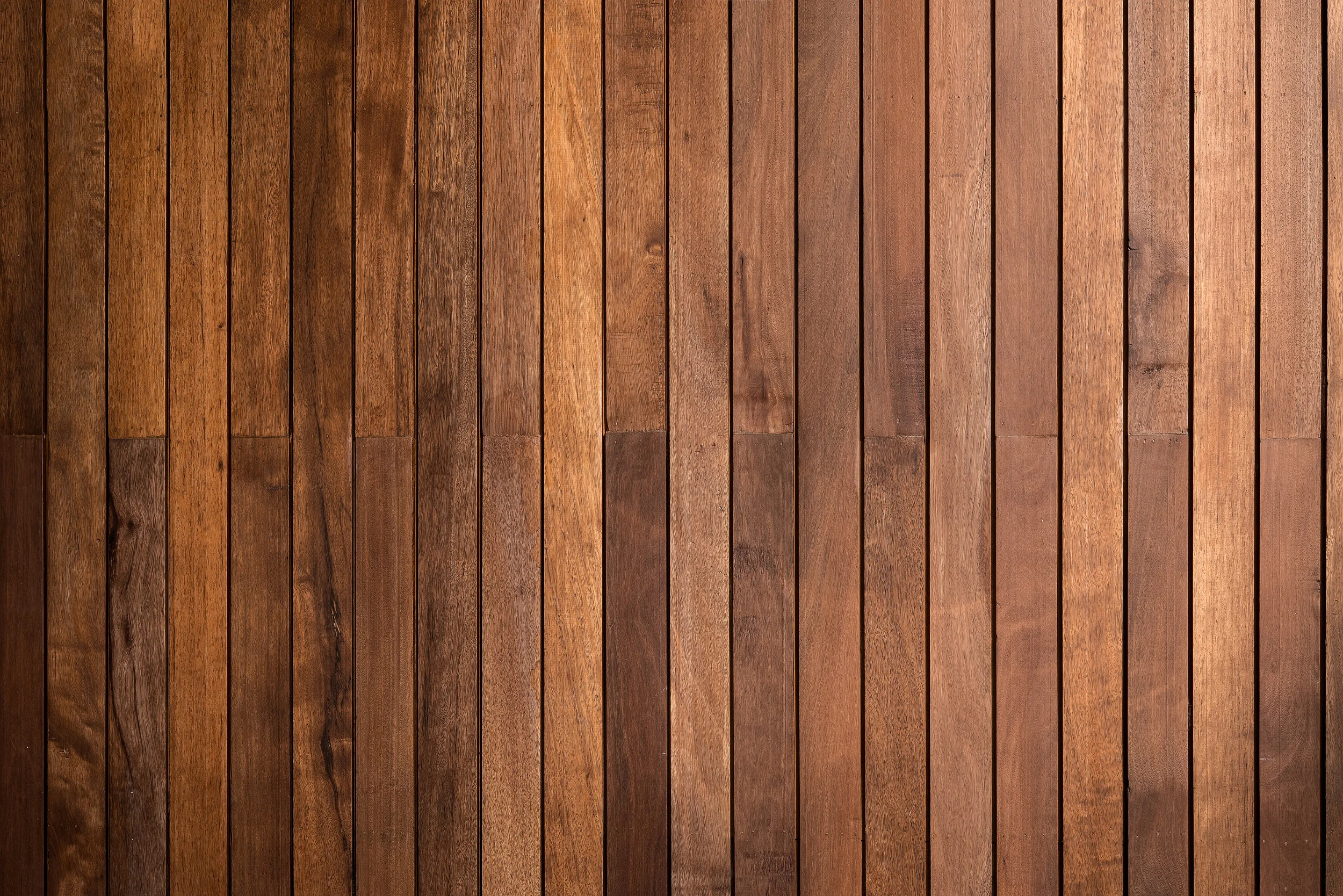
deck wood REFINISHING guide
Decks are constructed using a variety of wood species. Each material has unique characteristics and responds differently to weather exposure and maintenance.
Three of the most common deck materials include pressure treated lumber, cedar, and tropical hardwoods such as Ipe, all of which the professionals at Twin Cities Resurfacing have years of experience washing, sanding, stripping and refinishing.
Refinishing helps restore the natural appearance of the wood while protecting it from ongoing environmental exposure. When maintained properly, wood decks can remain beautiful and functional for decades.
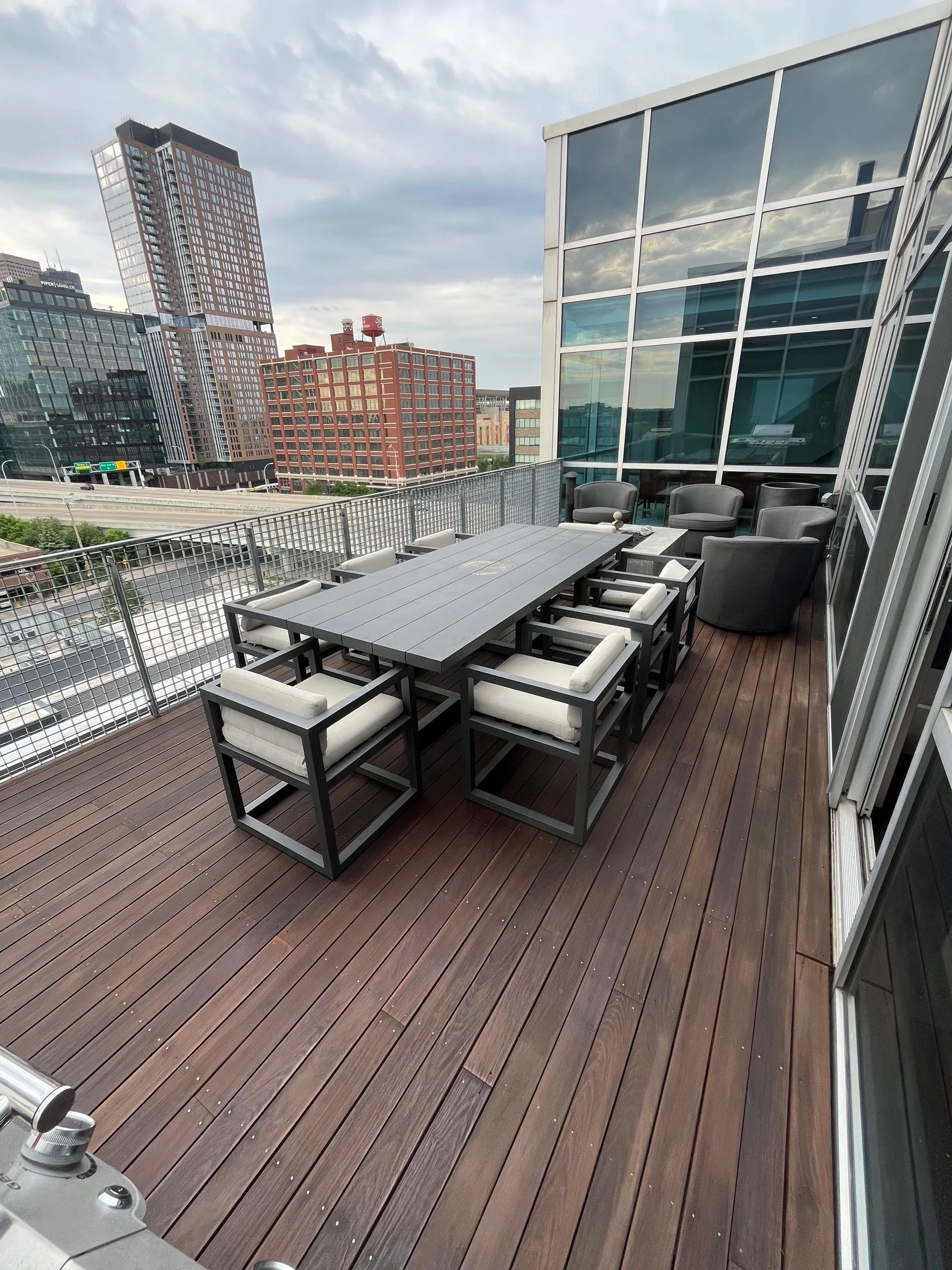
Common Types of Wood Decking
Pressure Treated Decks
Pressure treated lumber is one of the most widely used deck materials due to its affordability and resistance to insects and rot.
When new, pressure treated wood often has a green or brown tint from the treatment process. Over time, however, the surface typically fades and eventually turns gray as it weathers.
Refinishing pressure treated decks helps restore the wood’s appearance while protecting it from moisture and UV exposure.


Cedar Decks
Cedar is valued for its natural beauty and warm reddish color. It also contains natural oils that provide some resistance to insects and decay.
However, cedar decks still weather when exposed to sunlight and moisture. Without maintenance, cedar gradually fades and turns a silvery gray.
Refinishing helps restore the rich tones of cedar while protecting the wood surface from continued weathering.
Ipe and Other Tropical Hardwood Decks
Ipe and other tropical hardwood decking materials are known for their exceptional durability and density. Often referred to as Brazilian hardwood, Ipe is one of the hardest woods used for exterior decking.
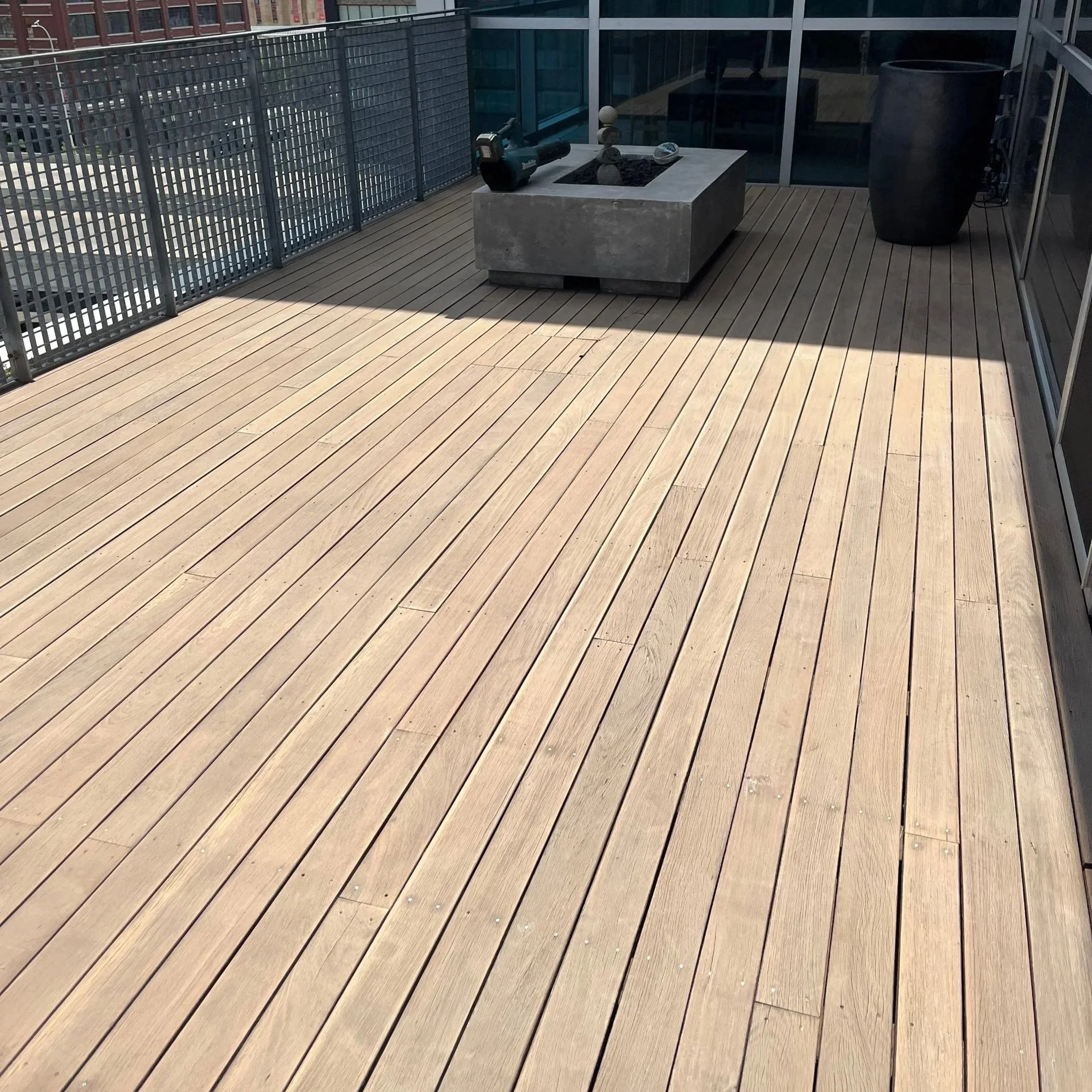
Despite its strength, Ipe will still weather over time when exposed to sunlight. Untreated Ipe decks often develop a silver-gray patina.
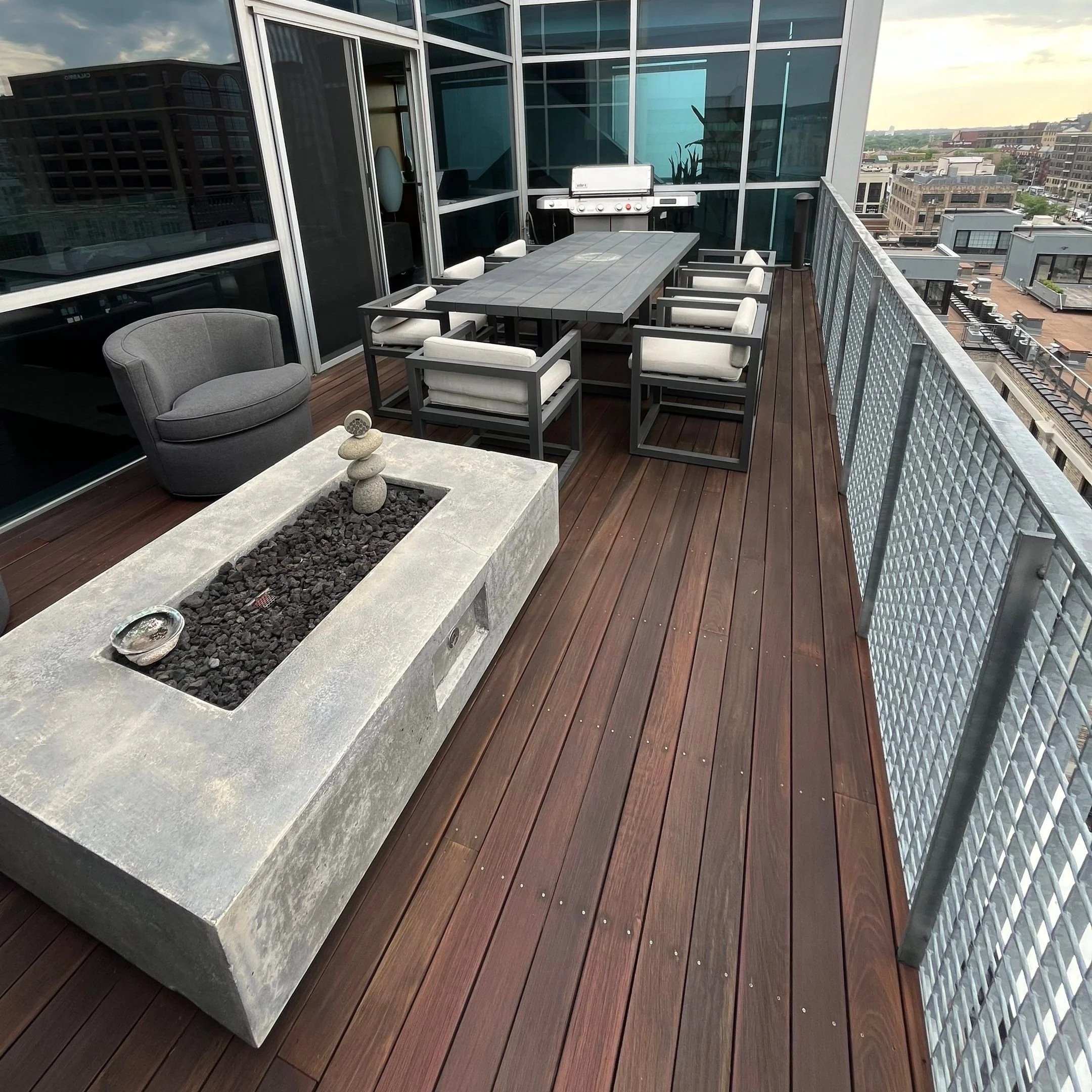
Refinishing can restore the deep brown tones that make hardwood decks so visually striking while helping maintain the surface of the wood.
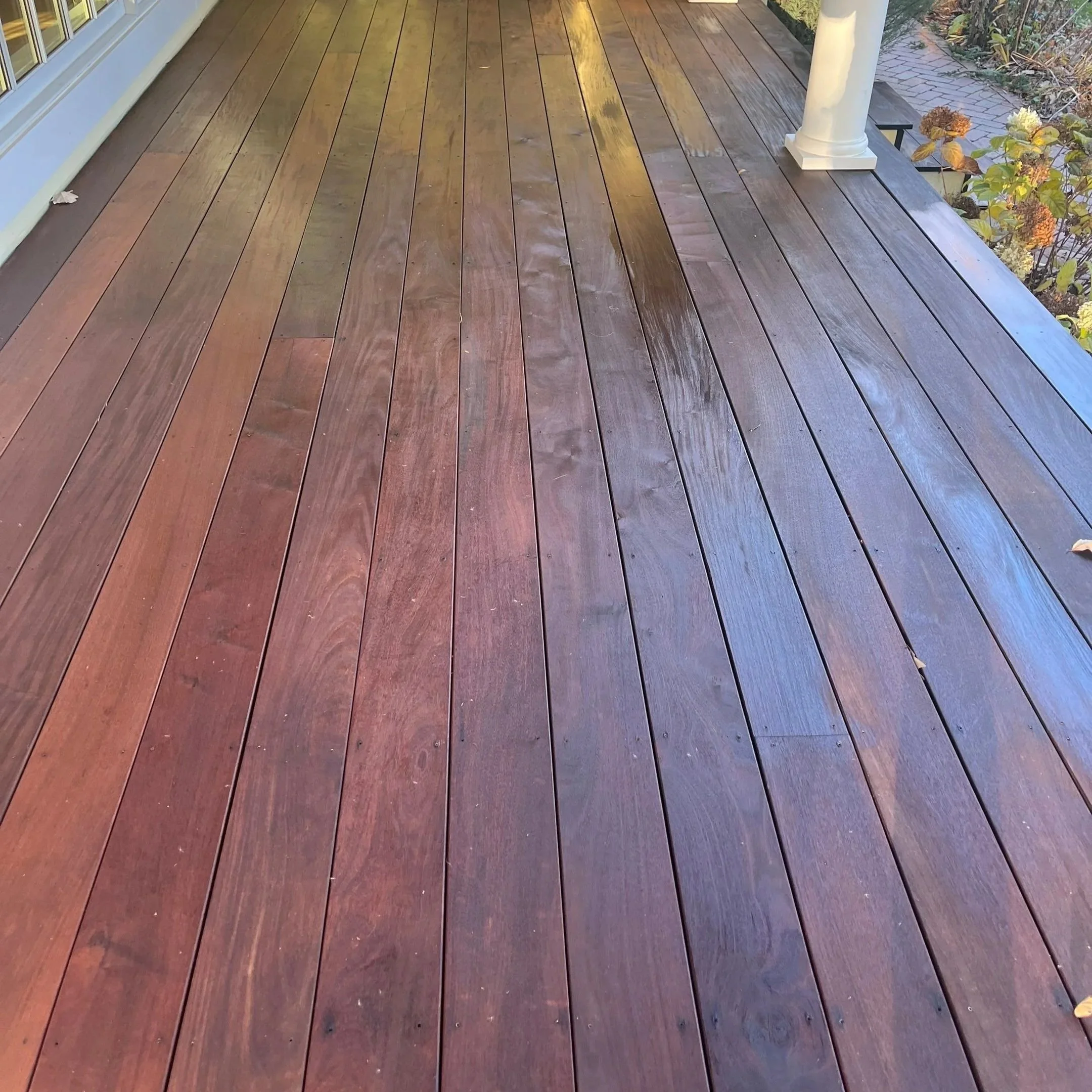
IPe deck before, during & after
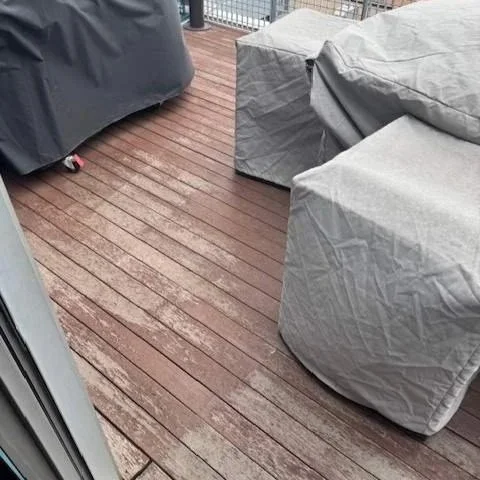
How Minnesota Weather Affects Wood Decks
Minnesota’s climate creates especially demanding conditions for exterior wood surfaces. Decks must withstand freezing winters, heavy snowfall, spring rain, summer heat, and seasonal humidity.
These conditions accelerate the natural weathering process for all types of wood. Regular maintenance and refinishing help protect the surface of the deck while preserving its appearance.
Signs a Deck May Need Refinishing
Over time, most decks will begin to show visible signs of weathering. Common indicators include:
• Faded or uneven color
• Wood turning gray
• Rough or splintered surfaces
• Dry wood that absorbs water quickly
• Areas of surface wear
When these signs appear, refinishing helps restore the surface of the wood and improve the appearance of the deck.
Maintaining the Beauty of Natural Wood Decks
Natural wood decking remains popular because of its warmth and character. Each wood species has unique grain patterns and color variations that make every deck distinct.
Routine maintenance and periodic refinishing help preserve these qualities while protecting the wood from environmental damage. Proper care allows wood decks to remain an attractive centerpiece of outdoor living spaces for many years.
